

420 results

In this editorial, Christopher Gitari argues that as the ICC case against Ruto and Sang comes to a halt, our focus must shift to other forms of justice in Kenya - including reparations for victims.

On August 7, the Extraordinary Chambers in the Courts of Cambodia (ECCC) found two senior leaders of the Khmer Rouge, Nuon Chea and Khieu Samphan, guilty of crimes against humanity. For many victims who have been waiting for 35 years, the judgment still felt like bittersweet justice.

Tunis, July 10, 2020—The Truth and Dignity Commission’s (TDC) final report was at last published on June 24, six year after the TDC began its work. It marks an important milestone in Tunisia’s transition, but the journey ahead to justice and democracy is a long one. Policymakers and practitioners now have the responsibility to take the next step forward.

With the publication of the much-delayed US Senate Intelligence Committee’s partial report on the CIA’s Detention and Interrogation Program, at long last the truth is out. In this op-ed, ICTJ's President David Tolbert asks the United States to acknowledge the truth, hold the perpetrators accountable and address its obligation to the victims of its detention policies.

The government of Uganda should work to institute comprehensive reparations for victims of the war against the Lord's Resistance Army (LRA). So states a new report by the International Center for Transitional Justice (ICTJ) and the Justice and Reconciliation Project (JRP).

This study examines the preventive effect of transitional justice in Peru in the aftermath of internal conflict and authoritarianism, focusing on the violence’s root causes and the differentiated impact on victims and affected communities. It contends that while transitional justice h...

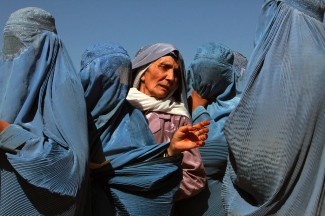
It only takes a quick skim of the daily news to see how the world has yet again failed Afghan civilians. Afghanistan has not had many good years in the past four decades of war, but the past 15 months have been decidedly fraught. The current chaos and spiking violence are proof that, despite what the US government has proclaimed, the “forever war” rages on. Peace and meaningful, victim-centered justice remain elusive.

ICTJ filed an amicus brief in the apartheid reparations case before the Southern District Court of New York on November 25, 2009. The brief supports a decision by the South African Government not to oppose legal action against five international companies that are accused of aiding an...

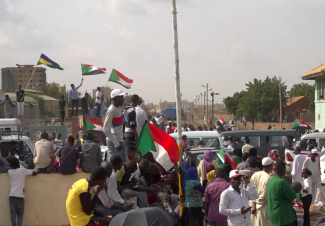
This April, Sudan marked a double anniversary: one of the 2019 revolution that toppled President Omar al Bashir’s decades-long repressive regime, the other of the 2023 outbreak of the ongoing civil war that has devastated the country. These contrasting occasions bring with them great hopes and deep pain. They also raise pressing questions: How long will Sudan have to suffer while the world’s attention seems turned the other way? How long will the voices of Sudanese who yearn for peace and justice continue to be sidelined?

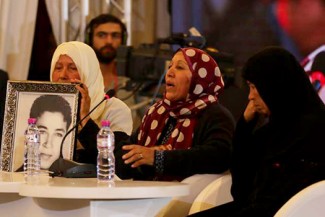
As part of its ongoing support of the Committee of the Families of the Kidnapped and Disappeared in Lebanon, ICTJ organized a three-day virtual workshop on transitional justice for university students on July 12-14, 2021. The students all served as volunteers on a project to establish an archive of the committee’s work and activism over the past four decades and participated in a previous workshop in February 2020 that introduced them to transitional justice concepts.