


205 results

ICTJ files legal brief supporting Peruvian families in their case for a just compensation program for victims of Peru's 1980-2000 internal armed conflict.

Human Rights Network-Uganda (HURINET-U), The Uganda Coalition on the International Criminal Court (UCICC), The International Center for Transitional Justice, Avocats San Frontiers and Atrocities Watch are dismayed to learn that Government of Uganda has extended an invitation to President Omar al...

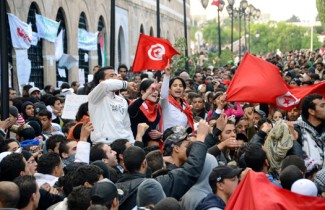
ICTJ joins groups calling for an anti-terrorism approach that respects citizens' rights in Tunisia. “Institutional reform can be a strong tool to prevent recurrence of human rights abuses and build a strong and credible democracy in Tunisia," said Salwa El Gantri, ICTJ Head of Office in Tunisia. "The current transitional justice process aims to shed light on similar violations that took place under the dictatorship, and we don’t want them to be committed again under the ‘fight against terrorism’ slogan.”

In a new briefing paper, ICTJ's Paul Seils and Roger Duthie examine what steps the international community can take during a crisis to support democracy and accountability.

ICTJ welcomes the announcement of formal peace talks between the Government of Colombia and the National Liberation Army (ELN). This new process opens the possibility of achieving comprehensive peace in the country and entering a new phase in Colombian history.

The International Center for Transitional Justice (ICTJ) condemns in the strongest terms the Egyptian government’s crackdown against human rights activists and calls on it to halt its ongoing investigation of independent human rights organizations in relation to the legitimate exercise of their activities and to close Case No. 173 (the “NGO foreign funding” case) once and for all.

ICTJ and the Human Rights and Atrocity Prevention Clinic at Benjamin N. Cardozo School of Law are pleased to announce a strategic research partnership to examine international law and practice regarding enforced disappearance and the missing.

A black-and-white photo of an open book pierced by a single bullet hole was chosen as the grand-prize winner of the International Center for Transitional Justice’s Youth Photo Contest, “THE WAR AS I SEE IT” in Lebanon. The photo, titled “Dominique,” was taken by Sibylle George, a 22-year-old architecture student at American University of Beirut.

Today the trial begins in the “Sepur Zarco” case of acts of sexual violence and domestic and sexual slavery committed from 1982 to 1986 by members of the Guatemalan army against Maya Q’eqchi’ women and the forced disappearance of several men. This will be the first time in the world that a national court has tried a case of wartime sexual slavery case.

What makes a public apology for human rights abuses meaningful? How best can a public apology recognize the dignity of victims, while paving the way for a more just and peaceful future? According to a new report released today by ICTJ, the best apologies clearly acknowledge responsibility for the violations, recognize the continuing pain of survivors and victims’ families, and are linked with efforts to compensate and assist victims materially and through other justice measures.

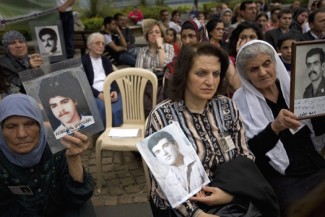
Twenty-five years after the end of the Lebanese Civil War, the families of the missing and forcibly disappeared in Lebanon are still waiting for answers about the fate of their loved ones. A new report by the International Center for Transitional Justice says the country seems to be ready to address this issue through an independent national commission and lays out the features of a successful future commission.

ICTJ welcomes the recent agreement announced by the Colombian Government and the Revolutionary Armed Forces of Colombia (FARC) to address issues of truth, justice, reparations and non-recurrence and hopes that it will pave the way for the successful completion of the negotiations to end the decades-long armed conflict in Colombia.

With hopes running high after the National League for Democracy’s landslide victory in November, a new ICTJ paper calls on the soon-to-be-established Burmese government to seriously consider taking steps to deal with Myanmar’s troubled past as a way to help end the cycle of violence and human rights violations in the conflict-torn country.

ICTJ held a series of workshops in Goma, Bukavu, and Bunia, Eastern DRC, from November 13 until November 20 to discuss opportunities for greater interaction and collaboration between civil society and criminal justice officials to advance the prosecution of international crimes in the Congo, in order to better address the concerns of affected communities.

Young people in Kenya now have a new tool to help them learn about difficult periods in Kenyan history and discuss justice, democracy, leadership, and their role as Kenyan citizens.

ICTJ finds the arrest of Hossam Bahgat, one of Egypt’s leading human rights activists, an ominous sign of the country’s continuous slide into oppression under President Abdel Fattah el-Sisi.

Children born as a result of wartime sexual violence in northern Uganda and their mothers face continued and compounded violations of their rights and dignity, says ICTJ. Without urgent redress, they will continue on a path of marginalization, poverty, and further abuse.

In commemoration of the 25th anniversary of the end of the Lebanese civil war, ICTJ is holding a youth photo contest to raise awareness about the importance of truth seeking and truth telling about people’s experiences of the war and post-war violence.

ICTJ welcomes the recent agreement announced by the Government of Colombia and the Revolutionary Armed Forces of Colombia (FARC) to commit to immediately implement measures to search for, locate, and identify those who have disappeared during the 50-year armed conflict and – if a final peace agreement is reached – to create a special unit dedicated to these tasks.

A complex law and ongoing violence are complicating efforts by the Colombian government to provide reparations to millions of victims of the country’s internal armed conflict, according to a new report by ICTJ.

ICTJ deplores the resolution of the African National Congress, at its National General Council meeting on Sunday, to withdraw South Africa from the International Criminal Court and lead an Africa-wide walkout from the court.

ICTJ welcomes the award of the 2015 Nobel Peace Prize to Tunisia's National Dialogue Quartet for helping the country transition to democracy. With the award, the Nobel committee acknowledges the "decisive contribution" made by the group of civil society organizations after Tunisia’s 2011 revolution.

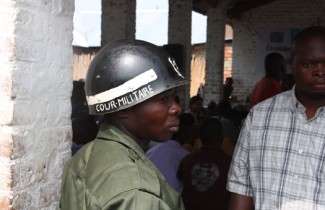
In cooperation with the High Judicial Council, ICTJ held a seminar today with senior representatives of the Congolese military and civilian judiciary and prosecutor’s office to discuss the dual jurisdiction of military and civilian courts over international crimes in the DRC.

Tunisia continues to take steps to fulfill its commitments under its ground-breaking Transitional Justice Law and realize the goals of the 2011 revolution. But a rocky start to the country’s new truth commission and proposed reconciliation-cum-amnesty legislation could undermine these efforts, according to a new paper by ICTJ.

The International Center for Transitional Justice welcomes the recent agreement between the Government of Colombia and the Revolutionary Armed Forces of Colombia to create a special criminal jurisdiction as part of an integrated system of truth, justice, reparations and guarantees of non-recurrence.