



616 results

In this op-ed, ICTJ Vice President Paul Seils analyzes the criminal justice agreement announced by the Government of Colombia and the FARC and discusses what aspects of the deal need clarification to ensure that it is capable of delivering the kind of truth and justice that victims of Colombia's armed conflict deserve.

After toppling Hosni Mubarak’s dictatorship in February 2011, Egyptians were eager for a reckoning with past injustices. But after years of political turmoil, the possibility of a genuine transitional justice process in Egypt is uncertain. We turned to three leading Egyptian activists to examine if there really is a chance for justice and reform in Egypt in the near future.

The resignation and indictment of President Otto Pérez Molina for corruption was a significant victory over impunity in Guatemala. In an interview with journalist Carlos Dada, we discussed how recent developments in Guatemala could impact other countries in Central America, such as Honduras and El Salvador.

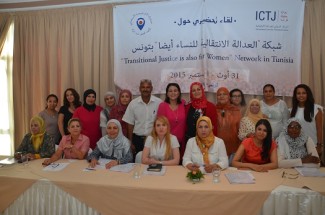
In collaboration with 11 Tunisian human rights organizations from nine regions, ICTJ recently established the network “Transitional Justice is also for Women” to engage women as active participants in transitional justice initiatives.

In this analysis piece, ICTJ's Cristián Correa expresses concern about a decision by the Inter-American Court of Human Rights leaving room for interpretations that condone the use of methods for combating subversion and terrorism forbidden by international human rights law.

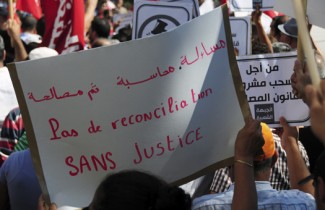
In this op-ed, ICTJ's President David Tolbert expresses concern about the new "Reconciliation Bill" proposed by the Tunisian government, which would grant amnesty to corrupt business people and Ben Ali-era officials in the guise of "reconciliation." "Massive corruption and violent human rights violations are mutually reinforcing, and unless this linkage is exposed and broken, it can lead to mutually reinforcing impunity," writes Tolbert.

ICTJ talked to Kenyan youth leader Carine Umutoniwase to know how learning from a violent past inspires youth in countries recovering from conflict and repression to avoid past mistakes and to come up with solutions that contribute towards a more just and accountable society.

On International Youth Day, ICTJ reaffirms the importance of engaging youth in efforts to reckon with the past in societies grappling with repressive and violent histories.

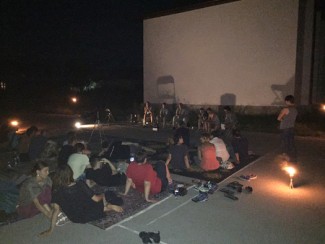
For the last three years, a group of young activists gather on the night of the 5th of August at the site of Trnopolje camp, out in the open, to reenact the way prisoners spent their night and through dialogue explore alternative ways of dealing with the past.

In this op-ed, ICTJ's President David Tolbert urges President Uhuru Kenyatta and Kenyan institutions to take concrete actions without further delay to provide reparations for victims, tackle the struggling police vetting reform, and prosecute the serious crimes that were committed during the post-election violence.

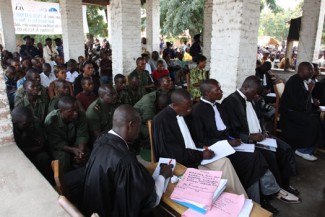
On International Justice Day, the head of ICTJ's Criminal Justice program in the Democratic Republic of the Congo (DRC), Myriam Raymond-Jetté, reflects on how to build on small successes in prosecuting international crimes in the national courts.

This summer, Hissène Habré, the former dictator of Chad, will finally stand trial before the Extraordinary African Chambers in Senegal for crimes against humanity, torture, and war crimes. In a conversation with Reed Brody, counsel and spokesperson of Human Rights Watch, who has worked with Hissène Habré’s victims since 1999, we discussed the potential impact of the trial on Chad and its broader significance for the struggle against impunity in Africa.

Bosnia and Herzegovina is marking the twentieth anniversary of the Srebrenica genocide. In this Op-Ed, ICTJ's Refik Hodzic asks, can we constructively talk about reconciliation in a country still gripped by war?

On 26 June each year, the world marks the International Day in Support of the Victims of Torture. The day was instituted in 1997 by the General Assembly of the United Nations, in an effort to build up the unanimity of condemnation required to abolish torture effectively in our time. In the effort to...

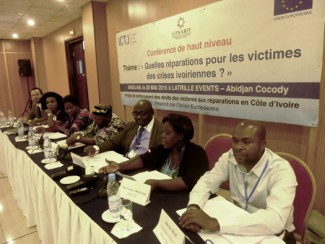
ICTJ recently facilitated consultations on reparations policy between victims of the Ivorian crisis and the National Commission for Reconciliation and Compensation for Victims in Abidjan, Côte d’Ivoire.

ICTJ's Virginie Ladisch explores the consequences of social stigmatization and other problems facing children born of war in Uganda, Nigeria and beyond in this new op-ed.

In this op-ed, ICTJ's Virginie Ladisch and Lindsay McClain Opiyo argue that children born of war remain largely ignored in responses to sexual violence in conflict.

As Kenya moves closer to a climate where comprehensive reparations for victims of post-election violence are possible, ICTJ is supporting women victims of sexual violence to ensure that their needs are reflected in any program of restitution.

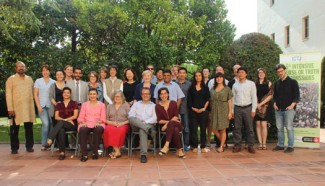
ICTJ and the Barcelona International Peace Resource Center (BIPRC) are pleased to announce the 7th Intensive Course on Truth Commissions, focused on a practical approach about the challenges in the design and implementation of a truth commission and, this year, exploring its intersections with media and the public sphere.

In the wake of the agreement between Colombia and FARC to form a truth commission, ICTJ's Fernando Travesí and Félix Reátegui discuss the role such a body should be expected to fulfill.

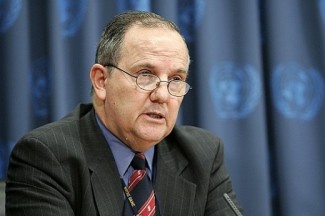
In this op-ed, ICTJ Vice President Paul Seils questions the policy objectives of punishing members of FARC accused of the most serious crimes in the ongoing Colombian peace negotiations.

As the Canadian Truth and Reconciliation Commission provides its final report this week, ICTJ presents a video in culmination of our work with youth in support of the TRC over the course of its mandate. "The Truth in the Classroom" demonstrates the commitment of children and youth across Canada to engage with issues related to Indian Residential Schools and to promote education about their legacy.

In this op/ed, the head of ICTJ's Kenya Program, Christopher Gitari, argues that President Kenyatta's recent apology to victims—though commendable—must be supported by solid reforms and initiatives for rebuilding the lives of those who have suffered the most.

As Tunisia’s Truth and Dignity Commission (TDC) prepares to hear the testimonies of thousands of citizens, ICTJ is assisting women’s groups in ensuring that their voices are heard in the process.

In this analysis piece, director of ICTJ's Reparative Justice program Ruben Carranza talks about the challenges Tunisia is facing in implementing individual and collective reparations measures since the fall of the Ben Ali dictatorship.