


616 results

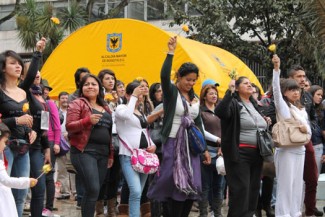
With the aim of reinforcing the legitimacy of the peace process, which could lead to a historic compromise that would deeply influence the future of the country, thousands of Colombians are marching today to express their support for the discussions, for peace, and for democracy. Their motto is: “We are the majority: Now is the time for peace!”

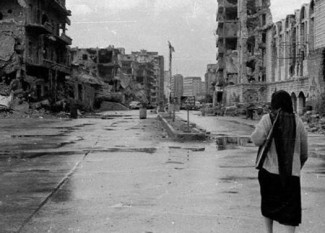
Despite the overwhelming percentage of Lebanese who were affected by recent wars and political unrest, discussion of Lebanon’s past is largely absent from public spheres. A new documentary follows youth in Lebanon as they set out to find the truth.

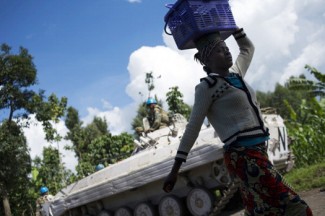
In this opinion piece, ICTJ's Sharanjeet Parmar asks: why do international efforts to tackle impunity for sexual violence in the DRC continue to miss the mark? High-level diplomatic visits are important in underscoring the responses needed for sexual violence survivors. However, without a strong political commitment from top Congolese authorities to address rampant impunity for sexual violence, no amount of attention or media coverage will reduce the violence or put an end to the cycles of suffering.

In this op-ed, ICTJ's Marcie Mersky argues that the significance of the genocide trial for José Efraín Ríos Montt stretches far beyond Guatemala: it is the first time that a former head of state is being tried for genocide in a credible national court, by the national authorities, in the country where the alleged crimes took place.

This opinion piece by Eduardo González, director of the Truth and Memory program at ICTJ, asks: can you build a solid, legitimate democracy on the sands of silence, or does truth provide a more trustful foundation?

In our work providing assistance to societies around the world, we draw continual inspiration from individuals and communities who refuse to ignore the abuses of the past, and who often face great obstacles to expose it. To honor their courage, we invite you to read a selection of perspectives on truth and dignity from those who have used their words to convey a powerful idea: truth is the foundation of justice.

This year, ICTJ's campaign for the International Day for the Right to the Truth centers around the theme, “Truth is the Foundation of Justice.” This notion, fundamental to the idea of a comprehensive approach to justice, is explored through several new releases from ICTJ.

On Tuesday, March 19, the genocide trial of General Efraín Ríos Montt began at the High Risk Tribunal in Guatemala. To talk about this historic development in Guatemala’s pursuit of accountability we talk with us one of the key players: Guatemalan Attorney General Claudia Paz y Paz Bailey

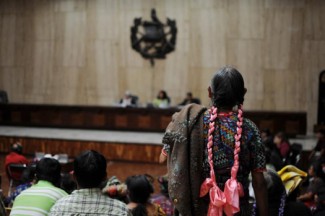
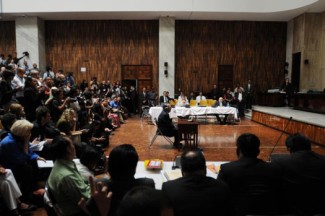
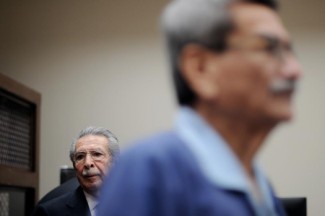
On a historic day for justice in Guatemala and the world, the trial for Guatemala’s former military dictator José Efraín Ríos Montt began this morning in Guatemala City. Ríos Montt and his co-accused, José Mauricio Rodríguez Sánchez – are standing trial on charges of genocide and crimes against humanity during the civil war in Guatemala, in which some 200,000 people were killed or disappeared, a majority of them indigenous Maya.

ICTJ’s president David Tolbert will be one of the featured speakers at this year’s Al Jazeera Forum in Doha, Qatar, which aims to explore the complex transformation of the socio-political and media landscapes of the Middle East and North Africa.

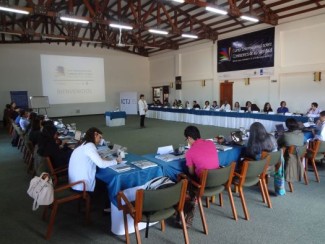
Nearly a decade after Colombia’s first transitional justice mechanisms were created, the country is now weighing options for the establishment of an official truth commission. To examine and inform these options, the International Center for Transitional Justice is hosting the International Course on Truth Commissions from March 11-15, 2013, in Villa de Leyva, Colombia. The course will be modeled after ICTJ’s international Intensive Course on Truth Commissions, which has been held for five consecutive years.

From its inception in 2003, the process of de-Baathification – the purge of Iraq’s state institutions of Saddam Hussein’s Baath Party members in the aftermath of the US-led invasion - polarized Iraqi politics and led to the collapse of many state functions. Today, Iraq continues to be haunted by its legacy. An examination of Iraq’s flawed vetting experience is presented in a major new ICTJ report, titled "A Bitter Legacy: Lessons of De-Baathification in Iraq."

From February 27-March 1, leading indigenous rights activists from around the world will join their counterparts and other experts at Columbia University to discuss access to truth, justice, and reconciliation for indigenous peoples.

In this edition of ICTJ's Program report, Kelli Muddell, director of ICTJ's Gender Justice program, reflects on ICTJ’s vision of gender justice, the challenges facing survivors of sexual and gender-based violence in times of transition, and how ICTJ is working to address inequality in countries like Colombia, Nepal, and Tunisia.

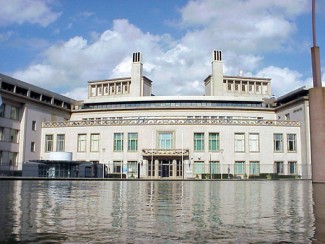
The Italy-based research center Osservatorio Balcani e Caucaso is hosting an online debate on the ICTY's contribution to reconciliation. The debate, featuring Refik Hodzic of ICTJ and Dr. Janine Clark of the University of Sheffield, who will present arguments for and against the notion that ICTY has contributed to reconciliation. Outside audiences are invited to participate online.

Maine’s foster care system was intended to act in the best interests of all children. But for indigenous children removed from their communities and placed with white families, often without the consent of their parents or tribes, the foster care system caused the painful loss of their cultural identity and traumatic severing from their heritage.

Indigenous rights are increasingly being addressed through different transitional justice measures, and ICTJ is actively involved in the discourse on how truth commissions and other transitional justice mechanisms can help the struggle for the rights of indigenous people.

The decision of a judge in Guatemala City to send former military dictator Efraín Ríos Montt to trial on charges of genocide and war crimes is a watershed moment in the country’s complex journey towards a genuine respect for the rule of law. This genocide trial - the first genuine attempt anywhere to prosecute a former head of state in his own country on charges of genocide – has the potential to shatter a significant part of the wall of denial that surrounds Guatemala. For that to happen, the trial must be fair and free of intimidation, argues ICTJ Vice President Paul Seils in this op-ed.

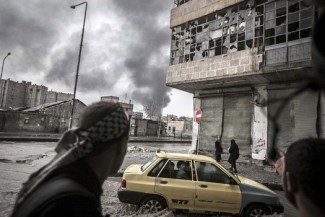
Though the future of President Bashar al-Assad’s regime remains to be seen, some are already planning for the complex aftermath of the regime’s demise. On January 26-27, Syrian activists joined ICTJ and other international experts in Istanbul for two days of discussion on possibilities for transitional justice in Syria.

A former U.S.-backed dictator who presided over one of the bloodiest periods of Guatemala's civil war will stand trial on charges he ordered the murder, torture and displacement of thousands of Mayan Indians, a judge ruled Monday. "It's the beginning of a new phase of this struggle," said Paul Seils, vice president of the New York-based International Center for Transitional Justice.

For the second consecutive year, ICTJ has been named among the world’s Top 100 NGOs by The Global Journal. ICTJ was also listed among the top three NGOs in the “Law and Justice” sector, acknowledging its unique role in assisting societies to strengthen the rule of law at the national level.

Recent proposals on using transitional justice as a means of stabilizing Syria in the aftermath of the eventual fall of the Assad regime— including by providing incentives for loyalists to give up a possible ‘fight to the death’ in Damascus — are a significant development in the debate on Syria. As Syrian groups and international actors gathered as “Friends of Syria” consider these proposals, it is of paramount importance to be clear about what is meant by transitional justice.

In a major effort to promote accountability for serious crimes in Africa, ICTJ joined hundreds of human rights groups and transitional justice partners to ask the African Union to prioritize justice. Addressed to the new African Union (AU) Chairperson Dr. Nkosazana Dlamini-Zuma, the letter warns that strained relationships between the AU and the International Criminal Court (ICC) may put justice at risk.

The International Center for Transitional Justice (ICTJ) signed a cooperation agreement with the Tunisian government on January 16 to provide further technical assistance in establishing transitional justice mechanisms in the country. The development comes two years after protests forced President Zine El Abidine Ben Ali to step down and flee the country in January 2011.

The International Center for Transitional Justice and the Special Court for Sierra Leone, with support from the Government of Canada, are pleased to announce "Exploring the Legacy of the Special Court for Sierra Leone," an expert conference in Freetown, 6-7 February, 2013.