
22 results

This reference manual offers a template for developing and operating an internationally-assisted criminal justice institution. It provides a practical basis for setting up such an institution from an administrative perspective, drawing on numerous relevant practices currently used in ...

DDR programs are seldom analyzed to consider justice-related aims; and transitional justice mechanisms rarely articulate strategies for coordinating with DDR. Disarming the Past: Transitional Justice and Ex-combatantsexamines how these two types of initiatives have connected—or f...

Where should justice for some of the world’s worst crimes be done? In national courts or at the International Criminal Court in The Hague? Our Handbook on Complementarity explores those questions, laying out the interconnected relationship between the ICC and national court systems in...

In many societies, histories of exclusion, racism, and nationalist violence often create divisions so deep that finding a way to deal with the atrocities of the past seems nearly impossible. These societies face difficult practical questions about how to devise new state and civil soc...

What hope is there for justice for victims of atrocities in profoundly fractured societies, where systems of government have broken down and social and political divisions run deep? What is the role of transitional justice in forging peace in countries like Colombia, after decades of ...

Vetting—the process by which abusive or corrupt employees are excluded from public office—is often practiced in post-conflict societies, yet remains one of the least studied aspects of transitional justice. In a co-publication of the Social Science Research Council (SSRC) and the...

As part of a transitional justice process, truth commissions are crucial mechanisms for clarifying the past and safeguarding victims’ rights. With over 50 truth commissions worldwide, they remain relevant in increasingly complex contexts shaped by rapid technological change and challe...

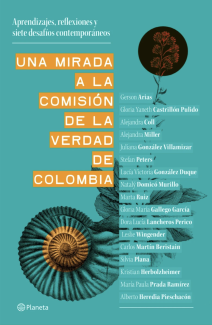
Cover of the book Una mirada a la Comisión de la Verdad de Colombia

This book features testimonies of young migrants originally from or currently residing in Lebanon, Libya, or Tunisia who left their home countries for political or socioeconomic reasons. The authors all took part in ICTJ’s 2023 writing contest titled “Overseas.” The contest aimed to e...

An illustration of people rowing in canoes

Since 1990, 65 former heads of state or government have been legitimately prosecuted for serious human rights or financial crimes. Many of these leaders were brought to trial in reasonably free and fair judicial processes, and some served time in prison as a result. This book explores...

In September 1985, ninemembers of Argentina’smilitary junta, whose successive regimes covered the period in Argentine history known as the “dirty war,” walked into a courtroom in downtown Buenos Aires.