

757 results

This joint report by ICTJ and the Kofi Annan Foundation explores common assumptions about why truth commissions are created in the wake of armed conflict and what factors make them more likely to succeed – or fail. It arises from a high-level symposium hosted by the two organizations ...

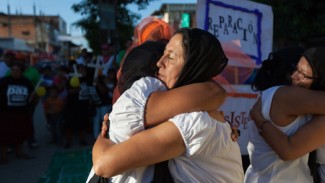
Recent developments in the country are challenging the taboos of publicly acknowledging sexual violence and paving the way to addressing the impact of conflict on women. Steadily, a broader conversation on a gender-sensitive approach to truth and accountability is burgeoning in Colombia, as well as on promoting women’s active participation in decision-making processes to redress victims of human rights violations.

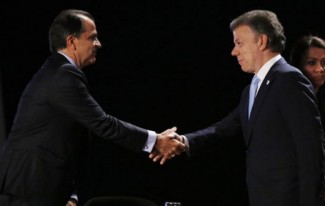
Colombia is at a crossroads after the results of the first round of the presidential elections, and the results could have grave consequences for the country's ongoing peace talks. In this interview, Maria Camila Moreno, director of ICTJ's Colombia program explains what's at stake.

This briefing paper summarizes the findings of consultations undertaken by ICTJ with women’s groups in Gulu, Lira, and Soroti on confronting impunity and engendering transitional justice processes in northern Uganda. Its purpose is to help incorporate women’s needs and justice demands...

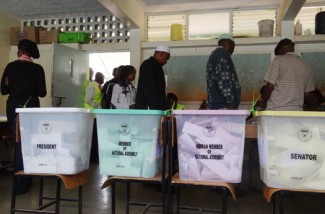
In early May, the African National Congress (ANC) held on to power in South Africa’s general election. However, there is a widespread feeling that the party that oversaw the creation of the groundbreaking Truth and Reconciliation Commission has walked away from its obligations to the South African people.

ICTJ participated in the launch of a new report on the relationship between transitional justice and development, launched by the Swedish International Development Agency (Sida).

Three human rights groups have joined together to publish a new English edition of Hatun Willakuy, a book presenting the abridged findings of Peru’s Truth and Reconciliation Commission, on its tenth anniversary. The book, which is available online, will allow a larger number of readers to benefit from the findings of Peru’s truth-seeking process.

One year after its release, ICTJ presents a critical overview of the Final Report of Kenya’s Truth, Justice and Reconciliation Commission in a new study released today. The ICTJ study argues that, despite the controversies that surrounded the commission during its tenure, the Final Report should be read and treated with seriousness by those who support human rights and the rule of law in Kenya.

This paper analyzes the contents of the Final Report that the Kenyan Truth, Justice and Reconciliation Commission (TJRC) presented to President Uhuru Kenyatta on May 21, 2013, after four years of investigations. In particular, it evaluates the report’s information and findings, the lo...

A new amnesty law passed by the government in the Democratic Republic of the Congo (DRC) will grant amnesty to hundreds of members of armed groups engaged in hostilities, including members of the infamous M23 rebels, but stops short of pardoning serious crimes.