


523 results

As ArcelorMittal, the world’s largest steel company, invests 19.2 million pounds of steel to construct a monument marking London’s Olympic Games, a disturbing story is emerging about the refusal to memorialize a former concentration camp in Bosnia it owns today. Not only is ArcelorMittal unwilling to provide even a fraction of the cost of the London “Orbit” to commemorate the suffering of Bosnians in the notorious Omarska camp, but it has recently started denying victims access to the site.

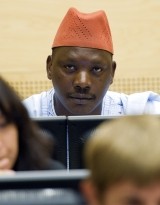
The conviction of Thomas Lubanga is a milestone for the international criminal justice system and may make an important contribution to the development and definition of the right to reparations in international human rights law. Accompanying a submission filed with the ICC in advance of its reparations proceedings, ICTJ has produced a briefing note examining what lessons the court can learn from the broader transitional justice field.

The conviction of Thomas Lubanga is a milestone for the international criminal justice system established by the Rome Statute, and may make an important contribution to the development and definition of the right to reparations in international human rights law. ICTJ has produced a br...

NEW YORK, March 22, 2011—The International Center for Transitional Justice (ICTJ) congratulates Pablo de Greiff, director of ICTJ’s Research Unit, on the nomination as the first UN Special Rapporteur on the promotion of truth, justice, reparation and guarantees of non-recurrence of serious crimes and gross violations of human rights.

After three years on trial and a total of seven in detention, Thomas Lubanga gained the dubious notoriety of becoming the first person to be convicted by the International Criminal Court (ICC) in The Hague. It would be encouraging if the court, including the prosecution, indicated it saw Lubanga’s judgment as an opportunity to learn critical lessons as well as celebrate a historic day in international justice.

For the millions of victims of the country’s successive wars, Lubanga is just one of many who are responsible for crimes on an astonishing scale. Congolese authorities must end the widespread impunity enjoyed by those who remain in positions of power in the government and military or violence and instability are likely to continue for years to come.

The War Crimes Chamber of Bosnia’s State Court is one of the most successful undertakings to address the legacy of mass atrocities in national courts. As this important institution finds itself under serious threat, the European Union must act quickly to put a stop to attempts of the Bosnian Serb political leadership to undermine Bosnia’s capacity to prosecute war crimes at state level.

Last week's decision by the International Criminal Court (ICC) in The Hague confirming four Kenyans must answer to charges of crimes against humanity does not excuse their government from responsibility to pursue justice at home, writes ICTJ vice president Paul Seils.

The decision of the International Criminal Court (ICC) confirming charges of crimes against humanity against William Ruto, Joshua Sang, Francis Muthaura, and Uhuru Kenyatta, and declining to confirm charges against Henry Kosgey and Mohammed Ali is a reminder that the vast majority of victims have still not seen justice done, the International Center for Transitional Justice (ICTJ) said.

Ambassador Bethuel Kiplagat’s recent attempt to return to the Truth, Justice and Reconciliation Commission (TJRC)—pending resolution of serious allegations implicating him in acts connected to human rights violations and corruption—threatens the viability and credibility of the TJRC process, ICTJ said.