

730 results

Transitional justice, at the core of its mission, strives to “break the ground on a future of peace and stability.” For countries with a violent or repressive past—and this can be said of most—implementing truth-seeking, criminal justice, reparations, and institutional reform measures forms the basis for establishing a culture of justice and respect for the rule of law.

Indigenous peoples are among those most affected by contemporary conflict. The resource-rich territories they occupy are coveted by powerful, often violent groups. Their identity is perceived with mistrust, sometimes with hate. Indigenous communities live at a precarious intersection ...

The conviction of former Liberian president Charles Taylor for crimes against humanity and war crimes committed in neighboring Sierra Leone finds both West African countries and the region grappling with his terrible legacy. And while the people, and especially Taylor’s victims, in Sierra Leone welcome it as an important step in the country’s effort to overcome the consequences of the brutal civil war, Liberians are still a long way from seeing accountability for the suffering they endured.

The conviction of Thomas Lubanga is a milestone for the international criminal justice system and may make an important contribution to the development and definition of the right to reparations in international human rights law. Accompanying a submission filed with the ICC in advance of its reparations proceedings, ICTJ has produced a briefing note examining what lessons the court can learn from the broader transitional justice field.

The conviction of Thomas Lubanga is a milestone for the international criminal justice system established by the Rome Statute, and may make an important contribution to the development and definition of the right to reparations in international human rights law. ICTJ has produced a br...

The National Conference to Launch a Dialogue on Transitional Justice in Tunisia was held on Saturday, April 14 in Tunis, initiating a process which should result in the adoption of a comprehensive law on transitional justice by the country’s National Constituent Assembly. ICTJ president David Tolbert delivered a keynote address.

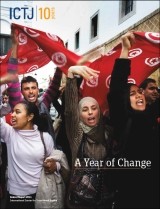
It is an honor and a privilege for me to be with you for this important national conference. One year ago, on this exact same date, just three months after the Tunisian people impressed the world by peacefully ending decades of repression, I had the pleasure to speak at a conference ICTJ organized here in Tunis together with the Arab Institute for Human Rights, the Tunisian League for Human Rights and the UN Office of the High Commissioner for Human Rights. It was an important and lively debate on how to address the legacy of the past and move forward.

Last month ICTJ, with Saint Joseph University’s Modern Arab World Research Center and UMAM Documentation and Research launched the website “ Badna Naaref” (We Want to Know). This oral history project conducted by students tells the stories of suffering and survival during the war in Lebanon, serving both to commemorate and educate.

NEW YORK, March 22, 2011—The International Center for Transitional Justice (ICTJ) congratulates Pablo de Greiff, director of ICTJ’s Research Unit, on the nomination as the first UN Special Rapporteur on the promotion of truth, justice, reparation and guarantees of non-recurrence of serious crimes and gross violations of human rights.

After three years on trial and a total of seven in detention, Thomas Lubanga gained the dubious notoriety of becoming the first person to be convicted by the International Criminal Court (ICC) in The Hague. It would be encouraging if the court, including the prosecution, indicated it saw Lubanga’s judgment as an opportunity to learn critical lessons as well as celebrate a historic day in international justice.