


475 results

This report assesses the gender sensitivity of the African Union Transitional Justice Policy (AUTJP). Drawing on continental practice and scholarship, it identifies opportunities for AU member states, civil society, and donors to strengthen the policy’s implementation and its responsi...

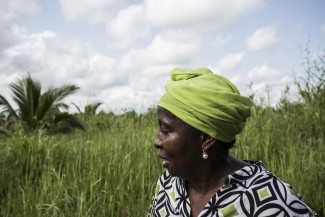
A woman stands in the profile position in a field of green plants on a sunny day with a clear blue sky

Displacement is one of the most widespread and tangible consequences of conflict, and has been chronically high in Africa’s Great Lakes region by any standard. This paper focuses on three salient gender-specific dynamics of conflict and displacement in the region that need to be incor...

The Liberian Truth Reconciliation Commission (TRC) was necessitated by the Accra Comprehensive Peace Accord signed in 2003. The insertion of the TRC in the peace agreement was largely seen by various actors as Liberia’s maiden step towards addressing a history that was fraught with gr...

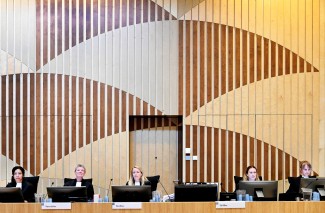
The International Criminal Court (ICC) opened its second trial against Germain Katanga and Mathieu Ngudjolo Chui on November 24, 2009. The men are former leaders of armed rebel movements from the Ituri district in the Democratic Republic of Congo (DRC).

This report evaluates Ghana's National Reconciliation Commission (NRC) against its own objectives and the comparative experiences of truth commissions in other countries. Although the NRC was successful in securing some reconciliation, it was plagued by lack of resources and an overt ...

As Burundi and South Sudan teeter on the verge of renewed conflict, with warnings of possible genocides, a new report from ICTJ on the African Great Lakes region asserts that there are lessons to be learned from neighboring countries that may be relevant in preventing new conflicts. The report calls for a clear understanding of victims’ needs and demands, a thorough political analysis and identifying realistic opportunities for acknowledgment and accountability, among other measures.

As ICTJ co-hosts a discussion on complementarity on the margins of the Assembly of State Parties (ASP) of the International Criminal Court (ICC), the principle of ensuring accountability for serious crimes has seen a major breakthrough at a recent high-level meeting at Greentree. The meeting brought together international justice actors, development practitioners, UN representatives, and national rule of law actors to discuss the practical implementation of complementarity and how to strengthen domestic systems seeking to investigate serious crimes.

Where should justice for some of the world’s worst crimes be done? In national courts or at the International Criminal Court in The Hague? Our Handbook on Complementarity explores those questions, laying out the interconnected relationship between the ICC and national court systems in...

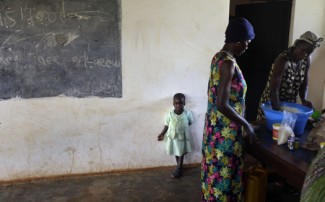
More than six years after the war in Uganda came to a formal end, the country has taken a landmark first step by unanimously adopting a resolution to establish a reparations fund informed by the experiences of both men and women.

In 2021, the Central African Republic created the Truth, Justice, Reparation and Reconciliation Commission (CVJRR) to establish the truth, pursue justice, and restore victims’ dignity, with a view to ultimately achieving national reconciliation. In this fragile country, battered by successive episodes of violence, justice, in its broadest sense, has always been and remains a lifelong demand of victims. After a lengthy operationalization phase, the CVJRR is now finally getting ready to start registering and hearing victims’ testimonies. The first step in this process is statement taking, which requires taking several key factors into account to be successful.