

480 results

Displacement was a major tactic used by armed groups during the brutal conflict in Liberia from 1989 to 2003. It is estimated that during this time, half the country’s population experienced displacement as a result of warfare. The large numbers of people forced from their homes meant...

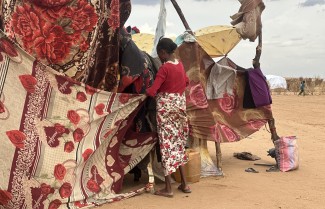
Despite the enormous challenges, Sudanese civil society and other stakeholders are prioritizing transitional justice, acknowledging the need to address past injustices to end the cycle of conflict in their country. ICTJ continues to support them as they envision and design victim-centered, gender-sensitive, and inclusive strategies. Leading these efforts is ICTJ's Ilaria Martorelli. In this interview, she discusses the prospects for lasting peace, accountability, and repair in Sudan.

The field of transitional justice is increasingly recognizing the relevance of mental health and psychosocial support (MHPSS) in contexts of massive human rights violations. Despite growing advocacy and awareness at the global policy level, however, the field lacks a systematic approa...

an image of colorful painting featuring a young girl

This paper provides an initial summary of the work of the Sierra Leone Truth and Reconciliation Commission (TRC) and points to some of the key difficulties it has encountered. The Commission's first year was challenging: it effectively lost its full preparatory period and the first tw...

This report describes the Special Court for Sierra Leone’s accomplishments in the first 18 months of its mandate. The Court was established to try "those bearing the greatest responsibility" for serious violations of international law and certain provisions of domestic law since Nove...

This case study provides basic information and policy analysis on the Special Court for Sierra Leone. It aims to help guide policymakers establishing and implementing similar mechanisms. The Court broke new ground in terms of narrowly focusing on those bearing the greatest responsibi...

Almost a year after the second post-election transition in Burundi, national and international attention is focused on the willingness and ability of the new government to implement the decisions agreed to during negotiations that culminated in the historic August 2000 peace and recon...

On September 18, the trial of Dominic Ongwen resumed at the ICC. Ongwen is on trial for 70 counts of war crimes and crimes against humanity – including various forms of sexual violence and the recruitment of child soldiers – committed in the former IDP camps of Lukodi, Odek, Abok, and Pajule during the 20-year insurgency in Northern Uganda. Ongwen is the first former child soldier who is facing trial at the ICC for crimes in which he was also a victim.

This week, the International Criminal Court heard closing arguments in the trial of Dominic Ongwen, a top commander of the Lord’s Resistance Army in Northern Uganda. Among the 70 counts of war crimes and crimes against humanity he faces are 19 counts of sexual and gender-based crimes, including rape, sexual slavery, and forced marriage—the widest range of such crimes ever to be brought to trial before the court. The case thus marks a milestone in the jurisprudence of these international crimes.

On February 14, Kenyans once again confronted their painful relationship with law enforcement and revisited the deep mistrust born of historical abuses. In an unprecedented ruling, a court found five senior police officers potentially culpable in gruesome murder during the police response to the 2017 post-election protests. On the same day, a senior police officer was convicted of murder and jailed for life.