173 results

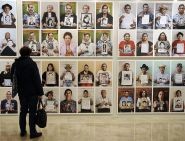
Last month ICTJ, with Saint Joseph University’s Modern Arab World Research Center and UMAM Documentation and Research launched the website “ Badna Naaref” (We Want to Know). This oral history project conducted by students tells the stories of suffering and survival during the war in Lebanon, serving both to commemorate and educate.

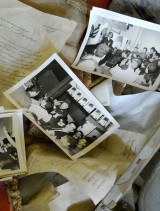
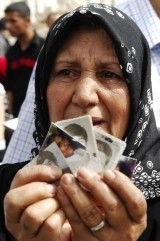
Lebanon has yet to seriously address the issue of thousands of people who went missing or were forcibly disappeared during the country’s civil war. ICTJ spoke with Lebanese activists to discuss a recent initiative taken by the families of the missing and civil society organizations to create a draft law on the missing.

A two-day roundtable discussion on a draft law on the missing and forcibly disappeared persons was held February 24–25 in Beirut, Lebanon. Organized by the Committee of the Families of the Kidnapped and Disappeared in Lebanon, Support of Lebanese in Detention and Exile (SOLIDE), Act for the Disappeared, and ICTJ, the roundtable was part of the project “Lebanon’s unaddressed legacy: the missing and the families’ right to know,” funded by the European Union (EU) and the Embassy of Switzerland in Lebanon.

David Tolbert, President of International Center of Transitional Justice: "I join many others in giving a final salute to Nino Cassese. He was man of extraordinary energy, singular determination and extraordinary intellectual talents but at the same time was an unassuming man, with a ready smile, an engaging anecdote and plenty of self-deprecation. Nino was a driving force behind the field of international criminal justice, not only through his leadership of both the International Criminal Tribunal for the former Yugoslavia (ICTY) and the Special Tribunal for Lebanon (STL) but through his unstinting writing and advocating on this most crucial of subjects."

This report is based on a population-based survey assessing attitudes about peace and justice in Northern Uganda. For nearly two decades, the Lord's Resistance Army has been in conflict with Ugandan government forces, killing countless civilians and abducting tens of thousands of chil...

This report compares findings from two population-based surveys (in 2005 and 2007) in districts of northern Uganda most affected by 21 years of conflict, including the Acholi districts. The studies capture attitudes about peace, justice, and social reconstruction. Developing a deeper...

This journal article examines challenges to the legitimacy of the Special Tribunal for Lebanon (STL). These challenges include selective impunity, the highly selective nature of the jurisdiction of the STL, and the fears that the STL itself will act as an instrument for foreign powers...

Background on the challenges in addressing legacies of past violence in sub-Saharan African countries such as Uganda, Ethiopia and Eritrea. The fact sheet gives an overview of the situation in the region and ICTJ's approaches in promoting transitional justice in individual countries. ...

This research note presents preliminary population-based data on attitudes about peace and justice in northern Uganda. The survey data presented in this report were collected from April to June 2007 in eight districts of northern Uganda.

The Special Tribunal for Lebanon is an internationalized court that will sit in the Netherlands and seek accountability for a specific set of crimes in Lebanon. It remains to be seen whether or how the Tribunal might contribute toward accountability in Lebanon, but it is clear from ex...