210 results

NEW YORK/BRASÍLIA, Oct. 27, 2011—The Brazilian Senate’s passage of the National Truth Commission bill yesterday represents an important step for the struggle against impunity. The Government of Brazil now has the opportunity to acknowledge a painful past and to implement an effective tool to establish the facts about past abuse, to help victims heal and to allow Brazilian society to understand a painful period of their history, therefore preventing recurrent violations.

ICTJ applauds Brazil’s momentous step toward the creation of a truth commission and notes opportunities to ensure its success. Brazil’s Chamber of Deputies approved on Wednesday a bill creating the National Truth Commission to establish the facts and responsibilities about crimes committed under the country’s military regime.

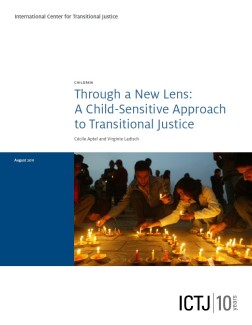
“Through a New Lens: A Child-Sensitive Approach to Transitional Justice” analyzes experiences of four countries—Liberia, Democratic Republic of Congo (DRC), Colombia and Nepal—and identifies some key lessons on children’s participation in transitional justice measures. Authored by Céc...

ICTJ hosted a conference on “Strengthening Indigenous Rights through Truth Commissions” July 19-21, 2011. Regional and international experts convened to discuss how truth commissions can incorporate and address indigenous peoples’ rights. Videos of each session and summaries of the conference proceedings are available.

ICTJ's expert conference on the relationship between truth-seeking and indigenous rights is in session. View the live stream here.

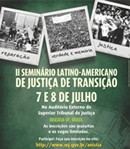
The second Latin American Conference on Transitional Justice closed July 8. In the concluding remarks, ICTJ Truth and Memory Program Director Eduardo Gonzalez stated that while this conference has focused on sharing the comparative experiences throughout Latin America, this has not been an academic exercise but a call to action. Read more on the conference blog

Although Brazil's dictatorship ended years ago, focus on transitional justice there is peaking now, as debate stirs over how to best address its past. Recent developments - including the Brazilian government's proposal of a truth commission, the opening of national archives, and the Inter-American Court of Human Rights' decision limiting the 1979 amnesty law - are at the core of the discussion. Eduardo Gonzalez, director of ICTJ's Truth and Memory Program, discusses the role accountability for the past can play in Brazil today.

This article focuses on the results of an ICTJ nation-wide survey: Colombian Perceptions and Opinions on Justice, Truth, Reparations, and Reconciliation. Colombians expressed a strong demand for accountability and reparations and low support for lenient sentences. ICTJ demands the Co...

ICTJ is pleased to announce two films premiering at the Human Rights Watch International Film Festival (HRWIFF) in June. IMPUNITY (New York premiere) + Q&A with filmmakers What is the cost of truth for families immobilized by Colombia’s violent past? In 2005, Colombia started gathering evidence...

Brazil’s new government is showing strong support for the passage of a bill creating a National Truth Commission investigating past human rights violations, writes Eduardo González, director of ICTJ's Truth and Memory Program. ICTJ also spoke with Marlon Weichert, human rights activist and regional prosecutor for Brazil's Federal Public Ministry, on the current debate surrounding truth-seeking and accountability in Brazil.