

223 results

ICTJ is pleased to announce two films premiering at the Human Rights Watch International Film Festival (HRWIFF) in June. IMPUNITY (New York premiere) + Q&A with filmmakers What is the cost of truth for families immobilized by Colombia’s violent past? In 2005, Colombia started gathering evidence...

As the United States and Colombia near the signing of a free-trade agreement and resolve differences over labor rights and other issues, the problematic extraditions of paramilitaries accused of savage crimes committed during the years of counter-insurgency remain far from the spotlight.

BOGOTÁ, May 12, 2011—The decision by President Juan Manuel Santos to recognize the existence of an internal armed conflict in Colombia is a positive step toward transparency and truth-telling in that country, ICTJ said today. The Colombian government has denied for years the existence of an internal armed conflict there, although it was never in doubt from an international law perspective.

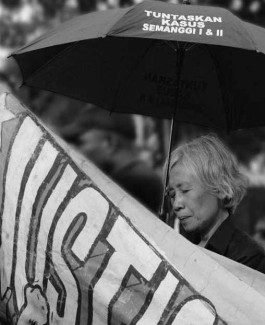
EXECUTIVE SUMMARY: A joint report released by the International Center for Transitional Justice (ICTJ) and KontraS (the Commission for the Disappeared and Victims of Violence) examines the variety of state-sponsored initiatives to address mass violations of human rights in Indonesia s...

A joint report released by the International Center for Transitional Justice (ICTJ) and KontraS (the Commission for the Disappeared and Victims of Violence) examines the variety of state-sponsored initiatives to address mass violations of human rights in Indonesia since the fall of So...

This is a compilation of cases from the Criminal Chamber of the Supreme Court of Colombia.

In August 2006 the Security Council created the UN Serious Crimes Investigation Team, as an extension of the previous investigation under the UN Integrated Mission Timor-Leste.

Justice and peace have been the highest aspirations of modern societies. Legislative bodies have enacted laws such as Law 975 of 2005, which ordered the State to provide instruments to resolve armed conflicts without neglecting fundamental social interests of truth, justice, and repar...

The purpose of this paper is to outline a proposal for a reparations program for Timor-Leste. Timor-Leste has experienced a number of mechanisms designed to provide justice for past wrongs. These have attempted to provide truth, criminal justice, and security sector reform. However to...

ICTJ hosted a meeting, “Peace and Justice in Asia,” with a particular focus on Indonesia, Timor-Leste, and Nepal, on December 2-3, 2008. The two-day conference brought together senior experts, officials, and community leaders from three distinct areas that have suffered conflict in In...