

273 results

More than fifty years of conflict in Colombia have left hundreds of thousands of victims of multiple forms of violence, such as forced disappearance, murder, extra-judicial executions, kidnappings, torture and various forms of sexual and gender-based violence, including rape.

Recent developments in the country are challenging the taboos of publicly acknowledging sexual violence and paving the way to addressing the impact of conflict on women. Steadily, a broader conversation on a gender-sensitive approach to truth and accountability is burgeoning in Colombia, as well as on promoting women’s active participation in decision-making processes to redress victims of human rights violations.

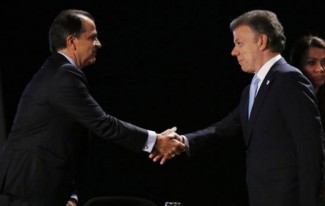
Colombia is at a crossroads after the results of the first round of the presidential elections, and the results could have grave consequences for the country's ongoing peace talks. In this interview, Maria Camila Moreno, director of ICTJ's Colombia program explains what's at stake.

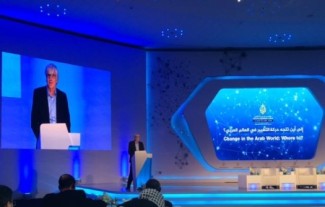
Three years after the so-called the “Arab Spring,” the post-revolution era has so far been marked by a mix of hope and hardships. At the 8th Al Jazeera Forum, ICTJ President David Tolbert explains what went wrong.

ICTJ participated in the launch of a new report on the relationship between transitional justice and development, launched by the Swedish International Development Agency (Sida).

ICTJ President David Tolbert will be a featured speaker at this year’s Al Jazeera Forum in Doha, Qatar. Al Jazeera Forum is the flagship event of Al Jazeera Media Network, at which Al Jazeera showcases its contribution to the world of media and politics.

ICTJ is pleased to announce the opening of an innovative site-specific theater performance in Beirut to mark the 39th anniversary of the Lebanese Civil War.

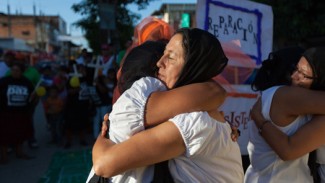
For the past three years, April 9th has become an important date to recognize more than 6 million victims of the armed conflict in Colombia. This year, hundreds of Colombians again went to the streets, to mark the National Day of Memory and Solidarity with Victims, as established by Law...

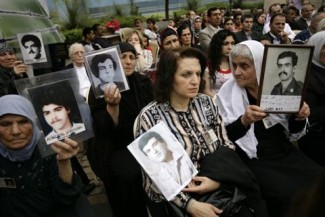
Lebanon has ruled that families of missing and disappeared persons would be allowed access to the investigation files and full report of the Commissions of Inquiry on the Missing and Forcibly Disappeared in Lebanon. In a new episode of our ICTJ Forum, we speak with lawyer Nizar Saghieh about what the ruling means for Lebanese families who continues to search for their missing loved ones.

To mark International Women’s Day, we invite you to read about four countries at the top of our gender justice priorities in the coming year, each with its own history, context, and complex sets of challenges.