444 results

The civil war in El Salvador officially ended 20 years ago, yet justice and accountability for past violations remain acutely absent. To launch a Spanish language podcast series focusing on Latin America ICTJ spoke with Carlos Dada, editor of the digital newspaper El Faro, about the critical role the media has played in uncovering the truth about past atrocities in El Salvador.

The last few decades have seen a revolution in the global struggle against impunity, but the decision to put General Efraín Ríos Montt on trial for crimes against humanity and genocide in Guatemala ranks among the most astonishing developments. Belatedly, but valiantly, a new breed of prosecutors, led by Attorney General Claudia Paz, have finally allowed his victims' pleas for justice to be heard.

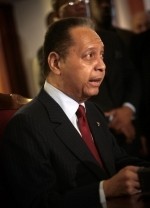
A Haitian court’s decision to drop charges of crimes against humanity against former president Jean-Claude Duvalier is a blow to the victims of his brutal dictatorship and sends a disturbing signal that the country cannot fulfill its basic legal obligations, ICTJ said today.

On Thursday, January 26, retired Guatemalan general Efraín Ríos Montt will stand before a judge in a Guatemalan court to hear the charges brought against him for genocide and crimes against humanity. ICTJ commends Guatemala for taking these important first steps to bring justice to bear after decades of impunity.

December 16, 2011 saw the world’s first ruling mandating reparations be paid for the unlawful recruitment of minors into armed forces. More than 300 former youth paramilitaries in Colombia will receive reparations including monetary compensation and medical and psychological care.

Following a restive year, Indonesia's human rights record is one of the situations under review during the 13th session of the UN Human Rights Council Universal Periodic Review (UPR) process in May–June 2012.

The People’s Representative Assembly of Indonesia passed on September 7, 2004, a bill creating a “Truth and Reconciliation Commission”, which is charged with clarifying abuses committed before 2000 and determining whether to award individualized amnesties for perpetrators and reparati...

As ICTJ co-hosts a discussion on complementarity on the margins of the Assembly of State Parties (ASP) of the International Criminal Court (ICC), the principle of ensuring accountability for serious crimes has seen a major breakthrough at a recent high-level meeting at Greentree. The meeting brought together international justice actors, development practitioners, UN representatives, and national rule of law actors to discuss the practical implementation of complementarity and how to strengthen domestic systems seeking to investigate serious crimes.

NEW YORK, Dec. 14, 2011—ICTJ welcomes the election of Fatou Bensouda of Gambia as the next prosecutor of the International Criminal Court (ICC). Ms. Bensouda was unanimously elected December 12 by the Assembly of States Parties (ASP) during its 10th session in New York City, and will be the court's second prosecutor, commencing in June 2012.

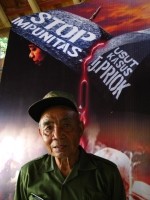
A report released today by ICTJ, together with the Indonesian Association for Families of the Disappeared (IKOHI) and the Coalition for Justice and Truth (KKPK), calls on the government to fulfill its obligations to provide reparations to thousands of victims of gross human rights violations.