


415 results

In this edition of ICTJ's Program report, Kelli Muddell, director of ICTJ's Gender Justice program, reflects on ICTJ’s vision of gender justice, the challenges facing survivors of sexual and gender-based violence in times of transition, and how ICTJ is working to address inequality in countries like Colombia, Nepal, and Tunisia.

Indigenous rights are increasingly being addressed through different transitional justice measures, and ICTJ is actively involved in the discourse on how truth commissions and other transitional justice mechanisms can help the struggle for the rights of indigenous people.

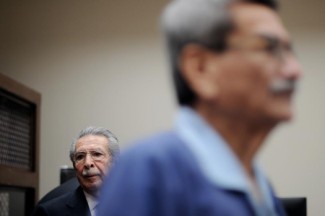
The decision of a judge in Guatemala City to send former military dictator Efraín Ríos Montt to trial on charges of genocide and war crimes is a watershed moment in the country’s complex journey towards a genuine respect for the rule of law. This genocide trial - the first genuine attempt anywhere to prosecute a former head of state in his own country on charges of genocide – has the potential to shatter a significant part of the wall of denial that surrounds Guatemala. For that to happen, the trial must be fair and free of intimidation, argues ICTJ Vice President Paul Seils in this op-ed.

A former U.S.-backed dictator who presided over one of the bloodiest periods of Guatemala's civil war will stand trial on charges he ordered the murder, torture and displacement of thousands of Mayan Indians, a judge ruled Monday. "It's the beginning of a new phase of this struggle," said Paul Seils, vice president of the New York-based International Center for Transitional Justice.

In January 2012, Guatemalan General Ríos Montt was formally charged with genocide for ordering massacres during the genocide in Guatemala. Only a year later, justice for victims has come under threat: Guatemalans and the international community are gravely concerned that the Constitutional Court could be pressured into granting amnesty. On Thursday, December 20, ICTJ joined colleagues and partners in the field to send a strong message to Guatemala: architects of atrocity must be held to account.

In Guatemala, it has taken years of relentless organizing by civil society and cooperation with international partners to begin to prosecute the most responsible, but progress has been made. Claudia Paz y Paz Bailey, currently the prosecutor general and head of the Public Prosecutor’s Office, has played an instrumental role in the struggle for accountability. In this recent interview, ICTJ spoke with Ms. Paz about confronting the legacy of the past at the national level within an international system of global criminal justice.

On Monday, December 10, the International Center for Transitional Justice will help tell the stories of victims and human rights activists at the forefront of the struggle for human rights across the globe. Send us images and texts that portray efforts seeking accountability, truth, remembrance, and redress in your community: we will share them on ICTJ’s Facebook page, and feature a selection of these stories on our website.

ICTJ partnered with the Center for Global Affairs at New York University to explore how political will of international and national actors impacts national war crimes proceedings. The panel examined four diverse country scenarios - the Democratic Republic of the Congo, Serbia, Iraq, and Guatemala.

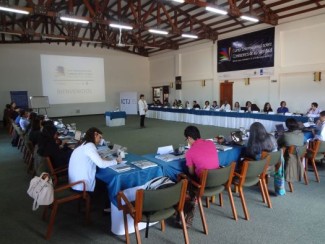
The International Center for Transitional Justice (ICTJ), in cooperation with the United Nations Development Programme (UNDP), with support from the Governments of Denmark and South Africa, and in close consultation with the Assembly of States Parties to the Rome Statute (ASP), held a...

In times of transition, reparations can make a tangible impact on the everyday lives of victims. As part of a larger process of social change, reparations programs should be part of an integrated approach to addressing the fundamental rights of victims, not just their immediate needs. In this way, reparations programs have the potential to be transformative. It was this potential that was considered at a recent international seminar, "Transformative Reparation for Women Victims of Armed Conflict," held in Colombia, on November 16, 2012.