



The Resource Library stores all of ICTJ’s published works since 2001 to the present, grouped by category and searchable by key word, country, issue, language, and more.
We are continually adding new content from our archives, especially our Multimedia content. Check back regularly to explore newly added videos, photo galleries, and audio products.
In this edition of the ICTJ Program Report, ICTJ Senior Associate Felix Reátegui discusses the principles behind the Truth and Memory program, and explains the imperatives of uncovering, acknowledging, and memorializing the past.
In this op-ed, ICTJ President David Tolbert says states are backsliding on their human rights commitments, and urges the international community to redouble its resolve for justice and accountability.
In this interview, Judge Walid Melki explains how Tunisia's Specialized Judicial Chambers will investigate and prosecute serious human rights violations.
ICTJ joins other international and national human rights groups from across the global calling for Egypt to protect the independence of non-governmental organizations.
This year, to mark the International Day of the Disappeared, we bring the story of Ziad and Ghassan Halwani, two brothers in Lebanon whose father was kidnapped and disappeared when they were young. Their story is a powerful testament to the long-term impact of disappearances on the life course of those who are still growing up.
This manual was developed within the Framework Agreement for Cooperation between the International Center for Transitional Justice (ICTJ) and the Attorney General's Office in Colombia. This agreement was signed to provide technical assistance to the National Analysis and Context Unit ...
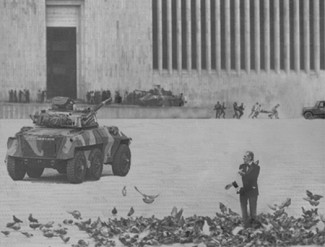
Growing up in Ras el Nabeh, a lively neighborhood in the heart of Beirut, was tough and dangerous in the early 1980s, as it was part of the Green Line –a maze of abandoned streets inhabited by weeds turned into a frontline that vertically divided Christian East Beirut from Muslim West B...
This report is the result of research conducted by consultant Olga Lucía Gaitán for the International Center for International Justice (ICTJ) to analyze the rulings handed down by the Justice and Peace Chambers and the Criminal Chamber of the Supreme Court of Justice in Colombia. The ...
By this summer, dozens of paramilitaries and guerrillas in Colombia's Justice and Peace process will have already spent eight years in prison. In accordance with the law, those who fulfill their obligations to contribute to the truth and provide reparation to victims should be released after serving eight years. In this op-ed, ICTJ's Maria Camila Moreno analyzes the valuable lessons learned through this process.
In this op-ed, ICTJ Vice President Paul Seils argues that the front line of justice must always be national courts and justice systems. "Citizens must see social institutions at work in their home countries, as it is there that courts can repudiate wrongdoing and reaffirm the most fundamental elements of the contract that binds a society together. It is there that having the dignity of a citizen can have its fullest meaning," writes Seils on International Justice Day.