667 results

When perpetrators of serious international crimes are brought to justice by the country in which they committed their crimes, it signals a strong commitment to accountability and the rule of law. To ensure that domestic investigations and prosecutions occur for serious crimes such as genocide and crimes against humanity, the need for international assistance goes beyond the walls of the courtroom: development agencies and rule of law actors can provide countries with essential support to fairly and effectively prosecute serious international crimes in their own courts.

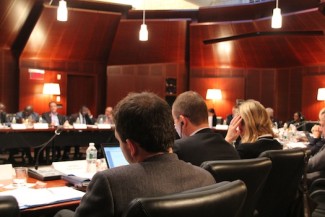
In the quest to bring perpetrators of massive crimes to justice, international courts should be considered only as a last resort. Efforts to establish rule of law require the development of national capacity to prosecute the most serious crimes. On 25 and 26 October 2012, leading international actors from the judicial, rule of law, and development sectors will convene at the Greentree Estate in Manhasset, New York for the third Greentree Conference on Complementarity. The meeting aims to examine the needs of and challenges to national prosecutions for the most serious crimes in four countries: Ivory Coast, the DRC, Colombia, and Guatemala.

This Wednesday saw the beginning of formal peace talks between the Colombian Government of Juan Manuel Santos and the leadership of the left-wing FARC guerrillas. This op-ed from ICTJ Vice President Paul Seils argues that a successful outcome will not be measured simply in the effective demobilization of roughly 8,000 militants. Durable peace will require a reimagining of the Colombian state, which has become both victim and perpetrator in a conflict now over half a century old.

An end could be in sight for the longest-running armed conflict in the Western Hemisphere. Peace negotiations between the government and the Revolutionary Armed Forces of Colombia (FARC) rebels have begun on 17 October in Oslo, Norway, and will continue in Havana, Cuba.

On October 2, an award ceremony honored the winners of the amateur photography contest on memory, called “Images to Resist Oblivion,” organized by the Center for Historical Memory and the International Center for Transitional Justice (ICTJ). View photo galleries from the three winning submissions.

The latest ICTJ Program Report explores transitional justice issues in Colombia and charts our work in the country with the longest running armed conflict in the world. In this interview, head of ICTJ's Colombia office Maria Camila Moreno answers questions on the ongoing transitional justice mechanisms in the country, and describes ICTJ's work with the government and civil society groups on issues of criminal justice, reparations and memory. She provides a look ahead to the new peace negotiations between the Colombian government and the FARC, and identifies key transitional justice issues at stake for the talks.

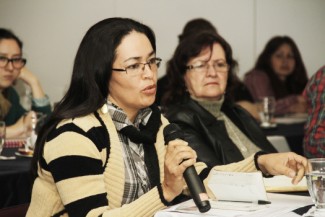
Transitional justice measures should serve to rectify, not replicate, patterns of discrimination against women. These mechanisms can challenge structural causes of gender inequality, by publicly acknowledging the factors that made such abuse possible. In the Middle East and North Africa, like in many other contexts, it is a challenge to ensure transitional justice measures do not further entrench the invisibility of gender-based abuses. As different countries consider the ways to confront the legacies of past abuses, ICTJ works with women’s groups across the region to build their capacity to engage in discussions around transitional justice and gender.

The Fourth Intensive Course on Truth Commissions, presented by ICTJ in partnership with the Barcelona International Peace Resource Center (BIPRC), focuses this year on the challenge of recognizing the experiences of vulnerable populations in the work of truth commissions. Practitioners and academics representing 17 countries will participate in the week-long course, including members of the Brazilian and Ivorian Truth Commissions, the Maine Wabanaki-State Child Welfare TRC Process, and ICTJ experts from around the world.

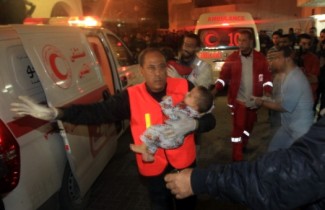
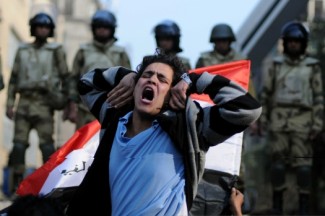
The latest ICTJ Program Report explores transitional justice issues in the Middle East and North Africa (MENA) and charts our work in this important and dynamic region. Claudio Cordone, ICTJ’s program director covering the MENA region, discusses individual country scenarios, prospects for transitional justice processes and explains ICTJ’s involvement and impact. Cordone speaks about transitional justice principles being at the root of popular uprisings referred to as “Arab Spring” and the challenges facing societies in their efforts to reckon with legacies of dictatorships and recent violence. He describes ICTJ’s efforts to address the impact of violence on women and promote their participation in transitional justice initiatives. The interview provides a thorough overview of ongoing initiatives and future prospects in Tunisia, Libya, Egypt, Syria, Yemen, Lebanon and Israel and Occupied Palestinian Territory.

The protracted displacement of Palestinian refugees presents a complex set of challenges for the international refugee, humanitarian, and transitional justice fields. For the most part, these global movements have treated the Palestinian situation as a case apart: Palestinian refugees...