


277 results

The International Center for Transitional Justice (ICTJ) and the Barcelona International Peace Resource Center (BIPRC) are pleased to announce an Intensive Course on Transitional Justice and Peace Processes, taking place in Barcelona, Spain, June 6 - 10, 2016. It will focus on practical examples of recent or paradigmatic peace processes where the question of justice formed a significant part of the negotiating context.

ICTJ spoke with Patrick Walsh, an Australian human rights advocate who helped establish and advise East Timor's Commission for Reception, Truth, and Reconciliation (CAVR).

ICTJ and the Human Rights and Atrocity Prevention Clinic at Benjamin N. Cardozo School of Law are pleased to announce a strategic research partnership to examine international law and practice regarding enforced disappearance and the missing.

In this op-ed, ICTJ President David Tolbert argues that Japan's recent, controversial apology to South Korean "comfort women" falls short of international standards.

With hopes running high after the National League for Democracy’s landslide victory in November, a new ICTJ paper calls on the soon-to-be-established Burmese government to seriously consider taking steps to deal with Myanmar’s troubled past as a way to help end the cycle of violence and human rights violations in the conflict-torn country.

This briefing paper calls on the soon-to-be-established NLD-led Burmese government to seriously consider taking steps to deal with Myanmar’s troubled past as a way to help end the cycle of violence and human rights violations in the conflict-torn country.

In this op-ed, ICTJ's Aileen Thomson and Bo Kyi argue that in the wake of Myanmar's historic elections, the release of all political prisoners held by the government would be an important step towards national reconciliation.

ICTJ finds the arrest of Hossam Bahgat, one of Egypt’s leading human rights activists, an ominous sign of the country’s continuous slide into oppression under President Abdel Fattah el-Sisi.

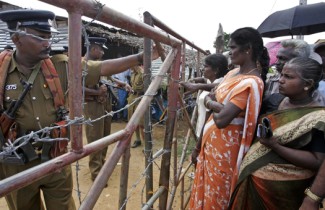
Sri Lanka may be undertaking a change of course towards accountability for atrocities committed during its 26-year civil war.

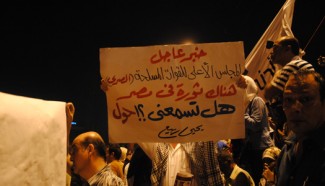
After toppling Hosni Mubarak’s dictatorship in February 2011, Egyptians were eager for a reckoning with past injustices. But after years of political turmoil, the possibility of a genuine transitional justice process in Egypt is uncertain. We turned to three leading Egyptian activists to examine if there really is a chance for justice and reform in Egypt in the near future.