

296 results

This summer, our Intensive Course on Transitional Justice and Peace Processes brought experts from around the world together in Barcelona to examine how transitional mechanisms can be integrated into peace negotiations. Read about the course and watch interviews with our experts.

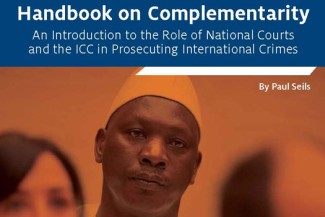
Where should justice for some of the world’s worst crimes be done? In national courts or at the International Criminal Court in The Hague? Our Handbook on Complementarity explores those questions, laying out the interconnected relationship between the ICC and national court systems in...

A new handbook written by ICTJ vice president Paul Seils explores the relationship between the ICC and national courts.

The struggle against impunity remains as important –and precarious –as ever as we celebrate International Justice Day on July 17. ICTJ marks the occasion with a look at complementarity, a concept critical to understanding the role that the ICC and national courts play in this struggle.

More than 1,000 people remain unaccounted for in Nepal following a decade of violence that concluded in 2006, and a new official body aims to shed light on these abductions. To support this critical mandate, ICTJ hosted an intensive three-week course for the commission, providing the technical and operational support necessary to finally tell the truth about Nepal’s disappeared.

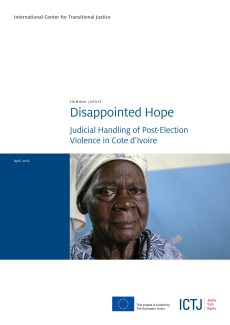
This report offers analysis of the current situation regarding the judicial handling of cases related to the post-election violence in Cote d’Ivoire. It looks at existing legal and political challenges within the domestic proceedings and suggests possible solutions.

Myanmar may have a new government under Aung San Suu Kyi, but former political prisoners continue to face challenges throughout the country. A new report sheds light on prisoners' challenges and recommends steps the government can take to offer redress.

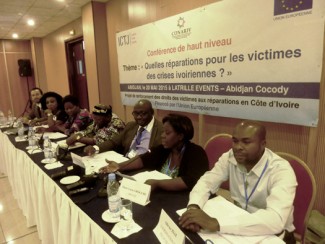
The Ivoirian government has a critical opportunity to define and implement a reparations policy that responds to the needs of the most vulnerable victims of the political, military and social crises experienced by Côte d’Ivoire between 1999 and 2012, according to the International Center for Transitional Justice (ICTJ).

After a society is torn apart by conflict or repression, who decides whether to remember or forget the painful past? Can forgiveness happen without acknowledgement of wrongdoing? Is there a difference between forgetting and denial? Join us as ICTJ debates the impact of remembrance on reconciliation with David Rieff and Pablo de Greiff.