


351 results

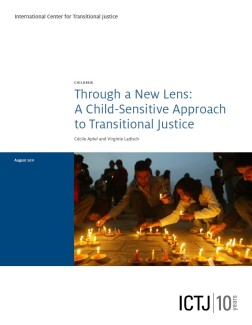
“Through a New Lens: A Child-Sensitive Approach to Transitional Justice” analyzes experiences of four countries—Liberia, Democratic Republic of Congo (DRC), Colombia and Nepal—and identifies some key lessons on children’s participation in transitional justice measures. Authored by Céc...

Women played a crucially important role in brokering peace in Solomon Islands but they still face significant barriers to inclusion in transitional justice initiatives. ICTJ has been working closely with women groups to facilitate their formal contribution to the Truth and Reconciliation Commission (TRC).

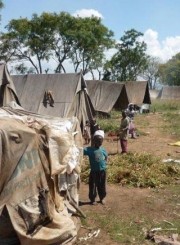
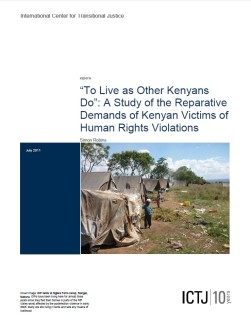
As Kenya continues to address its 2007-08 postelection violence, greater emphasis should be placed on victims’ reparative justice demands, according to a new ICTJ report. The report, “To Live as Other Kenyans Do”: A Study of the Reparative Demands of Kenyan Victims of Human Rights Violations, is a...

This paper documents the opinions of victims of human rights violations in Kenya about the country’s unfolding transitional justice process. The first section gives background into the human rights violations; the second section presents victims ideas about reparative justice. The rep...

ICTJ hosted a conference on “Strengthening Indigenous Rights through Truth Commissions” July 19-21, 2011. Regional and international experts convened to discuss how truth commissions can incorporate and address indigenous peoples’ rights. Videos of each session and summaries of the conference proceedings are available.

ICTJ's expert conference on the relationship between truth-seeking and indigenous rights is in session. View the live stream here.

This paper analyzes the Maubuti case in Timor-Leste, the third serious crimes case to be brought to trial after the closure of the UN-supported Serious Crimes Unit in 2005. Maubuti was indicted for crimes against humanity including murder, attempted murder, and rape. The decision and ...

This paper analyzes the serious crimes process the UN established in Timor-Leste to try serious violations of human rights perpetrated in 1999. The main difficulty facing this process is that the vast majority of suspects are in Indonesia, and the Timorese government has not been able...

This report examines community expectations and experiences of Timor-Leste’s unique transition from occupation to independence. It documents the results of focus group discussions on an array topcis including violence and conflict, truth recovery, justice, accountability, reconciliat...

This report focuses on 12 trials that took place before the Indonesian Ad Hoc Human Rights Court between March 2002 and August 2003. It analyzes the prosecution efforts and quality of the judgments, and assesses the political and institutional context in which these trials took place....