256 results

Indonesia’s history is littered with episodes of mass violence, whether state-sponsored, communally driven or separatist in nature. But in recent times the Indonesian government has successfully negotiated several peace agreements and brought about an end to mass human rights violatio...

In April 2008 historic elections to Nepal’s Constituent Assembly led to a political watershed: former Maoist guerrillas surprised everyone by coming out ahead, suggesting that a new era had come to Nepal. In its first sitting, the Constituent Assembly declared Nepal a republic and bro...

A new study by ICTJ finds that victims of human rights violations committed during Nepal’s 10-year armed conflict continue to experience hardship – and calls on the government to implement a comprehensive reparations program to respond to their acute and long-term needs.

In this opinion piece, Lucia Withers argues that Nepal's elected parties and their representatives should not limit their discussions to the establishment of a truth commission or whether it will provide for amnesties and/or prosecutions. Rather, they should focus on designing policies that are more comprehensive and that would better serve the rights and needs of conflict victims and contribute to broader peace-building efforts.

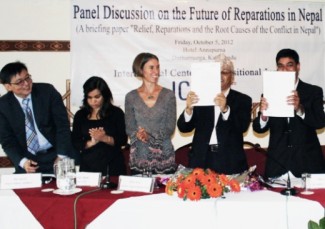
Six years after a peace agreement formally ended the conflict in Nepal, the slow, painstaking process of building the country’s new democracy has yet to provide comprehensive reparation to victims. To fully acknowledge the experience of victims of the conflict, Nepal’s government should not mistake the issuance of relief through material benefits for the implementation of a comprehensive reparation program. This is one of the central recommendations of "Relief, Reparations, and the Root Causes of Conflict in Nepal," a major new report from ICTJ, and authored by Ruben Carranza.

In a briefing paper released on the eve of the International Day of the Disappeared, ICTJ documents the experience of the wives of the disappeared in Nepal and calls for measures to address the poverty, social stigma, and legal limbo they continue to face in their day-to-day lives.

The survey sought to ascertain the opinions and expectations of the victims and their families in Nepal on a range of transitional justice issues, such as human rights violations, truth-seeking, justice, accountability, reparations, and reconciliation.

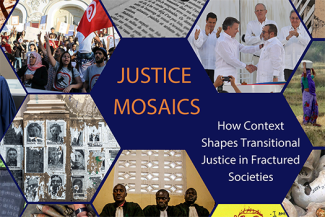
A new book by ICTJ titled Justice Mosaics: How Context Shapes Transitional Justice in Fractured Societies examines the challenges of responding to massive human rights violations in different and difficult circumstances in today's world.

A new handbook written by ICTJ vice president Paul Seils explores the relationship between the ICC and national courts.

In the aftermath of massive human rights violations, the voices of young people carry enormous potential: they can tell the truth about the past while offering new paths forward as their societies pursue peace and justice. However, if institutions want the insights of young people, they must avoid pre-formulated solutions and instead engage with youth on their own terms. A new guide released by ICTJ today aims to provide the tools necessary to do so, offering recommendations about how to responsibly and effectively gather statements from young people.