



123 results

ICTJ and the Human Rights and Atrocity Prevention Clinic at Benjamin N. Cardozo School of Law are pleased to announce a strategic research partnership to examine international law and practice regarding enforced disappearance and the missing.

A black-and-white photo of an open book pierced by a single bullet hole was chosen as the grand-prize winner of the International Center for Transitional Justice’s Youth Photo Contest, “THE WAR AS I SEE IT” in Lebanon. The photo, titled “Dominique,” was taken by Sibylle George, a 22-year-old architecture student at American University of Beirut.

In October 2015, ICTJ asked Lebanese young people to use their cameras to explore their understanding of the Lebanese civil war as it shapes their country’s past and present. "The War as I See It" youth photo contest was organized to raise awareness about the importance of tru...

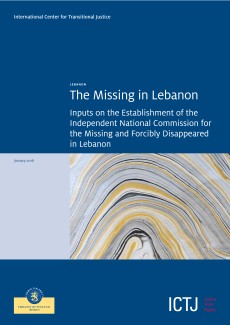
Twenty-five years after the end of the Lebanese Civil War, the families of the missing and forcibly disappeared in Lebanon are still waiting for answers about the fate of their loved ones. A new report by the International Center for Transitional Justice says the country seems to be ready to address this issue through an independent national commission and lays out the features of a successful future commission.

This study provides expert financial and operational analysis and information to help facilitate the establishment of an Independent National Commission for the Missing and Forcibly Disappeared in Lebanon, as envisaged in a draft consolidated bill now before the Lebanese Parliament. ...

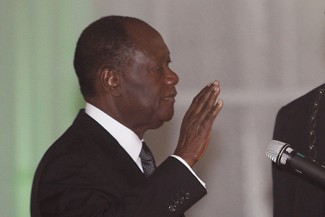
In this op-ed, ICTJ President David Tolbert argues that President Alassane Ouattara should use his second term as president to address widespread atrocities committed in Cote d'Ivoire's recent past.

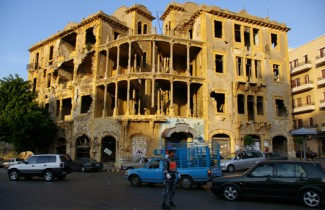
In commemoration of the 25th anniversary of the end of the Lebanese civil war, ICTJ is holding a youth photo contest to raise awareness about the importance of truth seeking and truth telling about people’s experiences of the war and post-war violence.

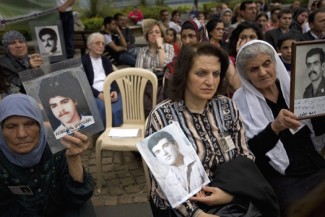
Some of the relatives’ stories start with the banging of a door at night, followed by a sudden abduction; others begin with a seemingly innocent citation to appear at a police station for a “routine procedure”. In any case, the stories always unfold in a desolate manner: as a loved one ...

On International Youth Day, ICTJ reaffirms the importance of engaging youth in efforts to reckon with the past in societies grappling with repressive and violent histories.

ICTJ recently facilitated consultations on reparations policy between victims of the Ivorian crisis and the National Commission for Reconciliation and Compensation for Victims in Abidjan, Côte d’Ivoire.