252 results

South Africa Parliament faces a historic moment. In this op-ed, ICTJ's Vice President Paul Seils remembers the great hope that marked the ICC’s emergence: "No country embodied that hope and that reality more powerfully and more inspiringly than South Africa."

Since Georgia’s independence in 1991, successive governments have struggled to deal with endemic corruption, organized crime, and various disputes along its borders, which sometimes sparked into armed conflict. Efforts to combat corruption and organized crime through its “zero-toleran...

The Africa Union's resolution to collectively support a strategy to withdraw from the ICC looks more like a machination of those who have instrumentalized an argument against the court to protect themselves from the long arm of justice, write ICTJ's top experts on Africa.

As we look back on 15 years of ICTJ's work, we recognize that our greatest asset is the people whose knowledge, experience, and dedication made our contribution possible. To celebrate all who have been part of ICTJ’s story over the years, we asked some of our former colleagues to share their...

Join President David Tolbert as we celebrate ICTJ at 15 years, during which there have been many pivotal moments, both for our organization and the struggle for justice globally.

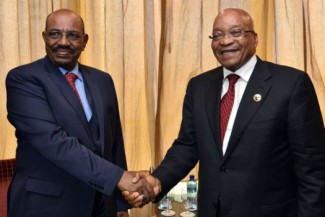
South African authorities apparently believe that once the country has officially withdrawn from the ICC, it will be free to invite the likes of Sudanese President al-Bashir to the country. That's not so, writes ICTJ's Howard Varney, who explains why the country's obligations would continue beyond its departure from the court.

Sexual violence against men and boys in times of conflict or repression is alarmingly common— and takes a markedly consistent form across contexts in terms of how it affects victims and societies as a human rights violation that is taboo to talk about. It has been committed in all cul...

A groundbreaking new book from the International Center for Transitional Justice (ICTJ) and UNICEF examines the complicated relationship between education, justice and peacebuilding in societies grappling with a legacy of violent conflict. It offers lessons on how education can be harnessed in a divided society to overcome the past and create the conditions for peace, often under very difficult circumstances.

Later this month, Tunisians will have an opportunity to hear the truth about the dictatorship's abuses directly from victims in a series of public hearings hosted by the Truth and Dignity Commission. However, in order for these public testimonies to be effective, the media must cover victims' stories fully and explore the issues underpinning their experiences. South African journalist Max du Preez spoke with his Tunisian counterparts to help prepare them for the challenges they will face. We sat down with him afterwards to discuss the role of media in transitional justice processes.

The International Center for Transitional Justice (ICTJ) decries the announcement that the country will seek to withdraw from the Rome Statute, the treaty that created the International Criminal Court and an international framework for fighting impunity for egregious crimes.