

288 results

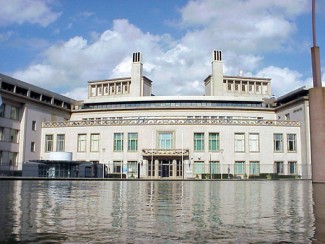
The Italy-based research center Osservatorio Balcani e Caucaso is hosting an online debate on the ICTY's contribution to reconciliation. The debate, featuring Refik Hodzic of ICTJ and Dr. Janine Clark of the University of Sheffield, who will present arguments for and against the notion that ICTY has contributed to reconciliation. Outside audiences are invited to participate online.

The government of Uganda should work to institute comprehensive reparations for victims of the war against the Lord's Resistance Army (LRA). So states a new report by the International Center for Transitional Justice (ICTJ) and the Justice and Reconciliation Project (JRP).

There is now an opportunity to design and implement a reparations program for victims of human rights and humanitarian law violations in Uganda. As with other countries emerging from conflict, the contours of a Ugandan reparations policy have been the subject of extended debate and ge...

In a major effort to promote accountability for serious crimes in Africa, ICTJ joined hundreds of human rights groups and transitional justice partners to ask the African Union to prioritize justice. Addressed to the new African Union (AU) Chairperson Dr. Nkosazana Dlamini-Zuma, the letter warns that strained relationships between the AU and the International Criminal Court (ICC) may put justice at risk.

The United Nations has proclaimed December 10 as International Human Rights Day. The date commemorates the signing of the Universal Declaration of Human Rights in 1948, which represented the reaction of the international community to the horrors of the Second World War. Today is a day for reflection more than celebration. A cursory scan of events from the last few weeks has thrown up examples that demonstrate that the belief in human rights for all - in treating all states the same - is more of a tissue-thin membrane than a robust bulwark.

On Monday, December 10, the International Center for Transitional Justice will help tell the stories of victims and human rights activists at the forefront of the struggle for human rights across the globe. Send us images and texts that portray efforts seeking accountability, truth, remembrance, and redress in your community: we will share them on ICTJ’s Facebook page, and feature a selection of these stories on our website.

The latest ICTJ Program Report presents ICTJ’s work in Africa. In a deeply insightful interview, Suliman Baldo, director of ICTJ’s Africa program and one of the world’s leading experts on transitional justice in Africa, discusses transitional justice processes in Ivory Coast, Kenya, Democratic Republic of Congo, and Uganda.

ICTJ partnered with the Center for Global Affairs at New York University to explore how political will of international and national actors impacts national war crimes proceedings. The panel examined four diverse country scenarios - the Democratic Republic of the Congo, Serbia, Iraq, and Guatemala.

The International Center for Transitional Justice strongly welcomes the decision of the UK High Court ordering the British government to pay damages to a group of Kenyans who were imprisoned and tortured by colonial authorities following the Mau Mau Rebellion of the 1950s.

National healing and reconciliation in Uganda requires a multilayered truth-telling process comprised of community and national processes that are mutually reinforcing and should not be mutually exclusive, as proposed by the JLOS report. A national truth-telling body should address is...