231 results

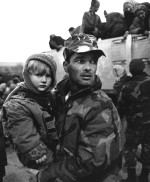
Property Rights in Kosovo explores cultural, political and social factors dating as far back as the Ottoman period that have contributed to the present state of property rights. It examines the legacy of the armed conflict and NATO intervention of 1999 in the massive population displa...

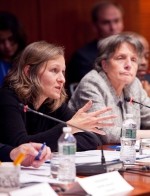
As ICTJ co-hosts a discussion on complementarity on the margins of the Assembly of State Parties (ASP) of the International Criminal Court (ICC), the principle of ensuring accountability for serious crimes has seen a major breakthrough at a recent high-level meeting at Greentree. The meeting brought together international justice actors, development practitioners, UN representatives, and national rule of law actors to discuss the practical implementation of complementarity and how to strengthen domestic systems seeking to investigate serious crimes.

NEW YORK, Dec. 14, 2011—ICTJ welcomes the election of Fatou Bensouda of Gambia as the next prosecutor of the International Criminal Court (ICC). Ms. Bensouda was unanimously elected December 12 by the Assembly of States Parties (ASP) during its 10th session in New York City, and will be the court's second prosecutor, commencing in June 2012.

View the live broadcast of tonight's panel discussion with Richard Goldstone, David Tolbert, Hassan Jallow and Diane Orentlicher from 6:30pm–8:30pm.

As part of an ongoing partnership between ICTJ’s Children and Youth Program and the Truth and Reconciliation Commission (TRC) of Canada, youth from throughout Canada attended the third national TRC hearings to document the work of the commission. This weekend they are attending a retreat to finalize their radio segments and short films to raise awareness about what they have learned.

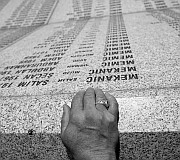
Join ICTJ as we co-host a delegation of RECOM’s leaders at two events in New York on November 14 and 15. They will share their experience campaigning for truth in the Western Balkans, present the draft mandate submitted to the presidents of the region, and discuss a successful public campaign that has gathered over 500,000 signatures in support of the commission.

ICTJ hosted its third Intensive Course, Truth-seeking and the Challenge of Sustainable Peace, on September 26–30. Based on concrete field experience, the participants explored the relationship between truth-seeking and peace in societies that have experienced or are still experiencing armed conflict.

ICTJ hosted a conference on “Strengthening Indigenous Rights through Truth Commissions” July 19-21, 2011. Regional and international experts convened to discuss how truth commissions can incorporate and address indigenous peoples’ rights. Videos of each session and summaries of the conference proceedings are available.

ICTJ's expert conference on the relationship between truth-seeking and indigenous rights is in session. View the live stream here.

“Residential schools affected everything about how we live. They targeted and destroyed our strong family unit, the basic foundation of our communities. They destroyed the glue that holds us together—love, respect and sharing.” These words, spoken by Charlie Furlong, a community leader of the Gwich'in people of Canada’s Northwest Territories, sum up the chilling legacy of the country’s policy of forced assimilation of indigenous cultures implemented through a system of Indian Residential Schools (IRS) from the 1870s to 1998.