385 results

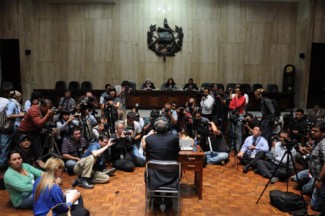
On International Criminal Justice Day, 2014, ICTJ joins the global celebrations marking the groundbreaking establishment of the Rome Statute in 1998, which created the International Criminal Court (ICC). To mark the day, we review five contexts where national systems proved it was possible to bring perpetrators to justice where it matters the most.

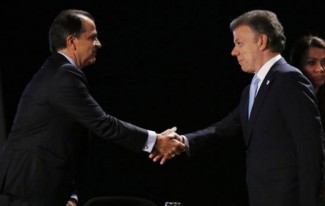
The recent re-election of Colombia’s president, Juan Manuel Santos, brings hope to a country seeking to end a half-century of conflict. But, as with so many peace processes, finding a balance between creating a stable accord and acknowledging the terrible injustices that occurred during the conflict can be difficult to achieve.

More than fifty years of conflict in Colombia have left hundreds of thousands of victims of multiple forms of violence, such as forced disappearance, murder, extra-judicial executions, kidnappings, torture and various forms of sexual and gender-based violence, including rape.

Recent developments in the country are challenging the taboos of publicly acknowledging sexual violence and paving the way to addressing the impact of conflict on women. Steadily, a broader conversation on a gender-sensitive approach to truth and accountability is burgeoning in Colombia, as well as on promoting women’s active participation in decision-making processes to redress victims of human rights violations.

Colombia is at a crossroads after the results of the first round of the presidential elections, and the results could have grave consequences for the country's ongoing peace talks. In this interview, Maria Camila Moreno, director of ICTJ's Colombia program explains what's at stake.

ICTJ participated in the launch of a new report on the relationship between transitional justice and development, launched by the Swedish International Development Agency (Sida).

ICTJ is pleased to announce it will host a series of online debates on new challenges and cutting-edge issues in transitional justice.

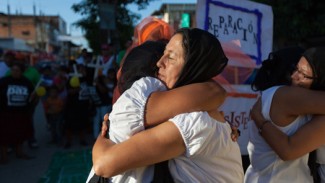
For the past three years, April 9th has become an important date to recognize more than 6 million victims of the armed conflict in Colombia. This year, hundreds of Colombians again went to the streets, to mark the National Day of Memory and Solidarity with Victims, as established by Law...

In this op-ed, ICTJ President David Tolbert argues that in order to meet the EU’s high standards on the rule of law and human rights, Serbia must address the legacy of its recent past in which Slobodan Milosevic’s regime and the institutions under its control were involved in some of the most notorious crimes committed in Europe since World War II.

To mark International Women’s Day, we invite you to read about four countries at the top of our gender justice priorities in the coming year, each with its own history, context, and complex sets of challenges.