132 results

ICTJ hosted a conference on “Strengthening Indigenous Rights through Truth Commissions” July 19-21, 2011. Regional and international experts convened to discuss how truth commissions can incorporate and address indigenous peoples’ rights. Videos of each session and summaries of the conference proceedings are available.

ICTJ's expert conference on the relationship between truth-seeking and indigenous rights is in session. View the live stream here.

“Residential schools affected everything about how we live. They targeted and destroyed our strong family unit, the basic foundation of our communities. They destroyed the glue that holds us together—love, respect and sharing.” These words, spoken by Charlie Furlong, a community leader of the Gwich'in people of Canada’s Northwest Territories, sum up the chilling legacy of the country’s policy of forced assimilation of indigenous cultures implemented through a system of Indian Residential Schools (IRS) from the 1870s to 1998.

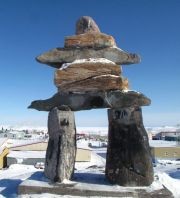
The Canadian Truth and Reconciliation Commission (TRC) will hold its second of seven national events from June 28 to July 1 in Inuvik, Northwest Territories. The event will provide survivors of Canada’s Indian Residential Schools (IRS) and other participants an opportunity to contribute to documenting and publicizing what took place in this program of forced assimilation.

The Kenya Transitional Justice Brief, a quarterly bulletin by ICTJ highlighting current developments in the field of transitional justice in Kenya. This first edition provides a summary and analysis of developments surrounding the International Criminal Court's (ICC's) involvement in ...

Background on the challenges in addressing legacies of past violence in sub-Saharan African countries such as Uganda, Ethiopia and Eritrea. The fact sheet gives an overview of the situation in the region and ICTJ's approaches in promoting transitional justice in individual countries. ...

A range of transitional justice measures should be considered in addressing the Kenyan crisis, including holding key perpetrators to account in a court of law, providing reparations for victims of the recent violence, and vetting security forces in order to remove those involved in ab...

The Commission of Inquiry into Post-Election Violence (CIPEV) was the outcome of the Kenya National Dialogue and Reconciliation Accord of February 28, 2008, negotiated by Kofi Annan and the Panel of Eminent African Personalities, and its sister agreement of March 4, 2008, known as Age...

Indigenous populations throughout the world are widely recognized as groups affected by political and economic marginalization. Countries that have used truth commissions to examine patterns of exclusion—including Chile, Guatemala and Peru—have found clear links between racism, politi...

As the first national truth commission to be created in an established democracy, Canada’s Truth and Reconciliation Commission (TRC) is a bold experiment. It is also the first TRC to focus exclusively on crimes committed against children and indigenous groups.