

284 results

Recent developments in the country are challenging the taboos of publicly acknowledging sexual violence and paving the way to addressing the impact of conflict on women. Steadily, a broader conversation on a gender-sensitive approach to truth and accountability is burgeoning in Colombia, as well as on promoting women’s active participation in decision-making processes to redress victims of human rights violations.

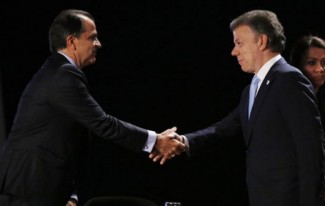
Colombia is at a crossroads after the results of the first round of the presidential elections, and the results could have grave consequences for the country's ongoing peace talks. In this interview, Maria Camila Moreno, director of ICTJ's Colombia program explains what's at stake.

ICTJ participated in the launch of a new report on the relationship between transitional justice and development, launched by the Swedish International Development Agency (Sida).

One year after its release, ICTJ presents a critical overview of the Final Report of Kenya’s Truth, Justice and Reconciliation Commission in a new study released today. The ICTJ study argues that, despite the controversies that surrounded the commission during its tenure, the Final Report should be read and treated with seriousness by those who support human rights and the rule of law in Kenya.

This paper analyzes the contents of the Final Report that the Kenyan Truth, Justice and Reconciliation Commission (TJRC) presented to President Uhuru Kenyatta on May 21, 2013, after four years of investigations. In particular, it evaluates the report’s information and findings, the lo...

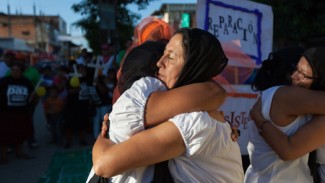
For the past three years, April 9th has become an important date to recognize more than 6 million victims of the armed conflict in Colombia. This year, hundreds of Colombians again went to the streets, to mark the National Day of Memory and Solidarity with Victims, as established by Law...

To mark International Women’s Day, we invite you to read about four countries at the top of our gender justice priorities in the coming year, each with its own history, context, and complex sets of challenges.

Join ICTJ and the Center for Global Affairs for a conversation on how the ICC and the African Union can move forward, and what the AU position means for effective prosecutions within Africa and elsewhere.

Can truth commissions help secure a just peace following a violent conflict in which massive human rights abuses are committed? In this special series of the ICTJ Forum, we present a series of conversations with some of the world’s top peace mediators and truth commission experts, whose collective experience include years on the front lines of critical peace agreements in Latin America, Africa, the Middle East, and Asia.

Dating back to the 1980s, when peace settlements were made across Latin America, truth commissions have become an important component of peace negotiations. In this opinion piece, ICTJ President David Tolbert calls for societies to give truth commissions a chance of fulfilling their potential by learning from their failures and success.