

171 results

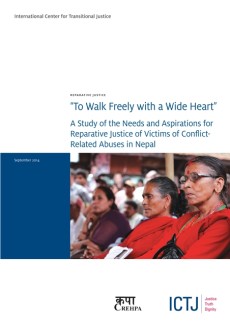
This report presents the findings of an in-depth survey of more than 400 conflict victims in 10 districts of Nepal, researching their immediate and long-term needs and aspirations. Participants included those who had received benefits through the government’s Interim Relief Program an...

The recent re-election of Colombia’s president, Juan Manuel Santos, brings hope to a country seeking to end a half-century of conflict. But, as with so many peace processes, finding a balance between creating a stable accord and acknowledging the terrible injustices that occurred during the conflict can be difficult to achieve.

During Nepal's armed conflict, more than 13,000 people were killed and 1,300 forcibly disappeared. Today, a new government has voted to create a Truth and Reconciliation Commission, as well as a Commission of Inquiry on the Disappearance of Persons. Many victims have protested the flaws in the proposals; meanwhile, no comprehensive reparations have been provided for those left most vulnerable by conflict. In this interview with ICTJ's Santosh Sigdel, we discuss developments related to ICTJ's work in Nepal.

Truth commissions can make important contributions to peace processes if all parties can agree on common objectives and there is genuine local political will to shed light on past events. This is the key finding of a new study – titled “Challenging the Conventional: Can Truth Commissions Strengthen Peace Processes?” – to be released on 19 June 2014 by ICTJ and the Kofi Annan Foundation.

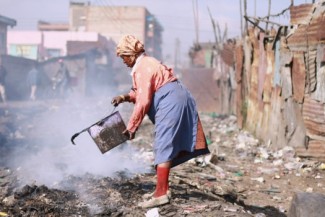
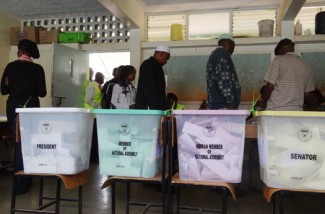
A new study from the International Center for Transitional Justice (ICTJ) shows that the Kenyan government has not effectively addressed the harms suffered by victims of sexual crimes committed during the violence that followed Kenya's disputed 2007 elections or ensured the accountability of perpetrators.

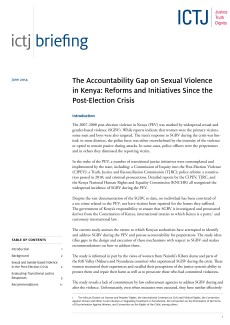
This briefing paper reviews the Kenyan government’s response to sexual and gender-based violence committed against women, men, and children during the 2007/2008 post-election crisis. It draws on interviews with over 40 survivors about their experience and analyzes the laws and transit...

This joint report by ICTJ and the Kofi Annan Foundation explores common assumptions about why truth commissions are created in the wake of armed conflict and what factors make them more likely to succeed – or fail. It arises from a high-level symposium hosted by the two organizations ...

Seven and a half years after the signing of the Comprehensive Peace Agreement, Nepal's Parliament voted to establish the Truth and Reconciliation Commission and a Commission of Investigation on Disappeared Persons. In this op-ed, ICTJ's Eduardo González Cueva explains why many victims have rejected the bill.

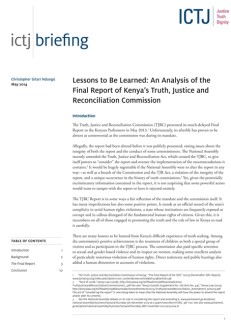
One year after its release, ICTJ presents a critical overview of the Final Report of Kenya’s Truth, Justice and Reconciliation Commission in a new study released today. The ICTJ study argues that, despite the controversies that surrounded the commission during its tenure, the Final Report should be read and treated with seriousness by those who support human rights and the rule of law in Kenya.

This paper analyzes the contents of the Final Report that the Kenyan Truth, Justice and Reconciliation Commission (TJRC) presented to President Uhuru Kenyatta on May 21, 2013, after four years of investigations. In particular, it evaluates the report’s information and findings, the lo...