
191 results

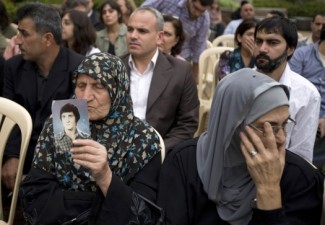
The wives of the missing and disappeared in Lebanon continue to suffer serious social, psychological, legal and financial effects on their lives, and the lives of their children, says a new report by ICTJ and the Institute for Women’s Studies in the Arab World at Lebanese American University.

70-94% of the victims of enforced disappearances are men. But what happens to the women left behind? ICTJ's Amrita Kapur explains why women are uniquely impacted by the crime, and how transitional justice can help.

A major new report from ICTJ canvasses 31 countries to see how the crime of enforced disappearance affects women, as both the disappeared and the female relatives of the disappeared. It finds that across cultures, women face serious barriers to seeking relief due to discriminatory laws and practices.

This report examines the impact on women of enforced disappearances committed during Lebanon’s civil war, focusing in particular on the effects on wives of the missing or disappeared—and their children. The research is based on interviews conducted by ICTJ with 23 wives of missing or ...

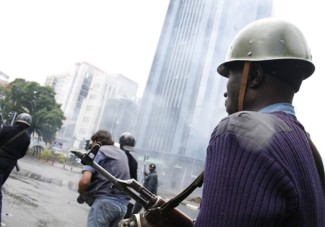
A new documentary produced by ICTJ highlights the need to reform Kenya's police force, and stresses the vital role civil society plays in conducting a thorough vetting process and the establishment of public trust in security forces.

ICTJ joins the global observations of the International Day for the Elimination of Violence Against Women, and the start of the “16 Days of Activism against Gender-Based Violence Campaign.” On this day, we recognize the ongoing efforts to protect women from violence in different parts of the world.

ICTJ Vice President Paul Seils writes that the ICC cannot endorse impunity measures any more than others committed to the defense of human rights and the struggle for peace and justice.

Kenya continues to deal with the repercussions of violence stemming from its disputed 2007 presidential elections, when political protests and targeted ethnic violence rocked the country, leaving thousands dead and hundreds of thousands displaced. Head of our Kenya office Chris Gitari gives an update on how Kenya is moving forward, and explains ICTJ's work in the country.

Lebanon should take firm steps to provide redress to victims of past conflicts and help prevent future violence, ICTJ and Lebanese rights groups said today at a roundtable discussion in Beirut. Lebanese authorities have mostly failed in their responsibility to end ongoing violations and ensure justice and truth for victims of the 1975-1990 war and successive conflicts.

This document presents wide-ranging recommendations for political and social reforms in Lebanon developed by a consortium of Lebanese civil society actors, as part of an ICTJ project. Directed at Lebanese authorities, the recommendations address the well-documented and widespread viol...