

751 results

The Maine Wabanaki-State Child Welfare Truth and Reconciliation Commission (TRC), the first of its type in the United States, marks one year of work.

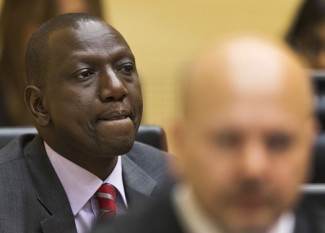
Join ICTJ and the Center for Global Affairs for a conversation on how the ICC and the African Union can move forward, and what the AU position means for effective prosecutions within Africa and elsewhere.

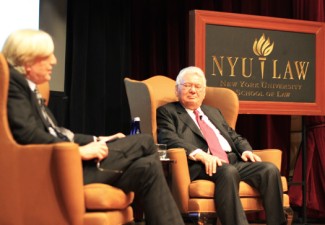
In December, ICTJ partnered with NYU School of Law and the Center for Human Rights and Global Justice to host Auschwitz survivor and Judge Thomas Buergenthal for the 7th Annual Emilio Mignone Lecture on Transitional Justice.

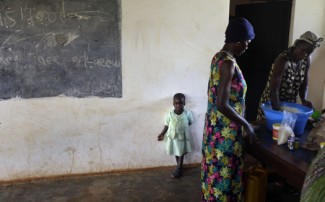
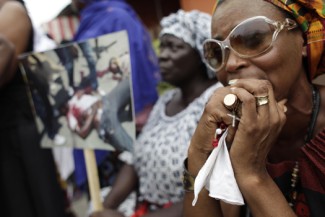
Nearly three years after violence in Cote d’Ivoire claimed the lives of over three thousand civilians and displaced hundreds of thousands, victims have yet to receive adequate reparation for the harm they suffered. ICTJ convened victims’ organizations, civil society, government officers and others to assess how the country should move forward to ensure victims see their right to reparation fulfilled.

Transitional justice processes have a fundamental public dimension: their impact depends in part on the social support they receive. Beyond outreach programs, other initiatives, such as media and cultural interventions, can strengthen—or in some cases undermine—the public resonance of...

As the Special Court for Sierra Leone formally ended its work on December 2, 2013, a new museum opened on the former premises of the court, dedicated to peace. The SCSL was a hybrid criminal court, established jointly by the UN and Sierra Leone to prosecute perpetrators of serious crim...

ICTJ mourns the passing today of Nelson Mandela, a luminary in the struggle for equal rights in South Africa and around the world. “Nelson Mandela’s courage in the face of oppression, his steadfast commitment to his principles and his magnanimous leadership during a difficult period of transition have long been an inspiration to me personally as well as to millions around the world. As we mourn our loss today, we celebrate a life of true greatness, dedicated to justice, without rancor or bitterness,” said David Tolbert, president of ICTJ.

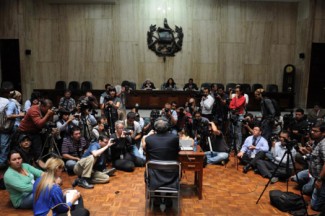
Guatemalan lawyers for victims in the case against former dictator Efraín Ríos Mont filed a petition before the Inter-American Commission on Human Rights to condemn the state of Guatemala for the impunity for crimes of genocide and crimes against humanity committed against the Ixil people.

Can truth commissions help secure a just peace following a violent conflict in which massive human rights abuses are committed? In this special series of the ICTJ Forum, we present a series of conversations with some of the world’s top peace mediators and truth commission experts, whose collective experience include years on the front lines of critical peace agreements in Latin America, Africa, the Middle East, and Asia.

Dating back to the 1980s, when peace settlements were made across Latin America, truth commissions have become an important component of peace negotiations. In this opinion piece, ICTJ President David Tolbert calls for societies to give truth commissions a chance of fulfilling their potential by learning from their failures and success.