

569 results

Later this month, Tunisians will have an opportunity to hear the truth about the dictatorship's abuses directly from victims in a series of public hearings hosted by the Truth and Dignity Commission. However, in order for these public testimonies to be effective, the media must cover victims' stories fully and explore the issues underpinning their experiences. South African journalist Max du Preez spoke with his Tunisian counterparts to help prepare them for the challenges they will face. We sat down with him afterwards to discuss the role of media in transitional justice processes.

In Cote d’Ivoire, avenues for education system reform are limited. To help youth find their voice, ICTJ and UNICEF facilitated an innovative truth-telling project led by Ivorian young people themselves. The result: an exploration of the unique experiences of young people during the conflict, told through radio broadcasts, public discussions and reports to government officials.

The International Center for Transitional Justice (ICTJ) decries the announcement that the country will seek to withdraw from the Rome Statute, the treaty that created the International Criminal Court and an international framework for fighting impunity for egregious crimes.

UN operations are due to end in Côte d’Ivoire next June, but the country must pursue a victim-centered approach to justice even after UNOCI leaves. An ICTJ-organized conference works to prepare government, civil society, and the diplomatic community for the UN departure and chart a way towards justice and a stable peace for all of Côte d’Ivoire.

Ukraine's Maidan Revolution in 2014 ushered in a wave of decommunization efforts, ostensibly in order to ensure respect for human rights and to prevent a recurrence of the crimes of Communist and Nazi regimes. However, the laws were largely a product of contentious politics of memory: they further a particular understanding of past events that will likely continue to fuel division and distrust among Ukrainians, and between Ukraine and Russia.

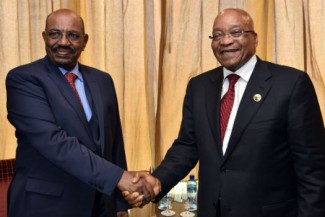
Amid deteriorating human rights conditions in the country, the lower house of Burundi’s National Assembly voted overwhelmingly in favor of withdrawing from the Rome Statute, the treaty that created the International Criminal Court. “Burundi should reconsider this ill-conceived decision, which undermines efforts at the national level to bring justice, peace, and stability to the country,” said ICTJ President David Tolbert.

In transitional contexts, reporting does not simply present the facts, but instead shapes the parameters for interpreting divisive political issues. Coverage in such polarized contexts can mitigate or obscure the substance of transitional justice efforts to establish what happened, wh...

In a society grappling with the legacy of the past, citizens must make informed judgements and disentangle the facts from the sticky web of political rhetoric, denial, and polarizing propaganda. To do so, they rely on one key agent of social change: the media. But how can transitional processes effectively partner with the media and engage key constituencies? And what happens when media play a decisively negative role in mediating information about war crimes?

In Côte d’Ivoire, the state aims to restore victims’ rights and offer reparations to those affected by 2010’s post-election violence. A couple of years ago ICTJ came to the conclusion that discussions about how to provide reparations to victims had not sufficiently considered victi...

This volume examines the effects, risks, and potential of extending the field of transitional justice to cases that do not present a key moment of political transition to peace or democracy and instead are defined by political continuity and ongoing conflict. It begins with analyses o...