


569 results

On International Justice Day, July 17th, ICTJ looks at the legacy of the Special Court for Sierra Leone through the voices of those to whom its work was most important: the citizens of Sierra Leone. Our new multimedia project, “Seeds of Justice: Sierra Leone,” presents five portraits of Sierra Leoneans whose lives were impacted by this court.

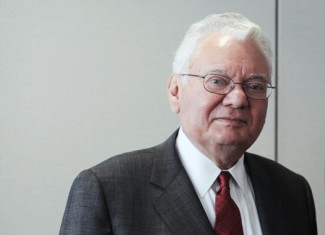
Thomas Buergenthal, Holocaust survivor and former judge of the International Court of Justice, is one of the world's most distinguished jurists. In conversation with ICTJ President David Tolbert, Judge Buergenthal shares his own personal story of surviving the Holocaust as a young boy, and reflects on the changing landscape of transitional justice around the world

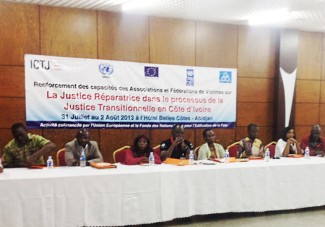
Cote d’Ivoire has embarked on a process of addressing the legacy of internal strife that culminated in the post-election violence of 2010. On June 12, 2013, ICTJ will co-host high-level talks on strengthening Cote d’Ivoire’s judicial capacity to prosecute serious crimes proscribed by the Rome Statute of the International Criminal Court (ICC).

In a new op-ed, ICTJ Vice President Paul Seils argues that Kenya’s Truth, Justice and Reconciliation Commission (TJRC) should have been the shining light that led the way in restoring trust and confidence in office holders, institutions and government. Instead, its final report is mired in pointless controversy. Now, Kenya has a key opportunity to address allegations that the president's office interfered with the report's findings.

The International Center for Transitional Justice ICTJ welcomes the release of the Truth, Justice and Reconciliation Commission (TJRC) Report, which is the result of an official truth-seeking process undertaken by Kenya following the 2007/2008 post-election violence. The report shares the TJRC’s findings on gross violations of human rights, economic crimes, illegal acquisition of public land, marginalization of communities, and ethnic violence between 1963 and 2008.

Reparations seek to recognize and address the harms suffered by victims of systematic human rights violations. ICTJ’s Reparative Justice program provides knowledge and comparative experience on reparations to victims' groups, civil society and policymakers worldwide. In this edition of the ICTJ Program Report, we look at ICTJ's work on reparations in dynamic transitional contexts such as Nepal, Colombia, Peru, DRC, and Uganda.

ICTJ released a briefing paper today examining current opportunities for prosecuting serious crimes within Kenya’s national judicial system, including crimes committed during the postelection violence of late 2007 and early 2008 (PEV), which claimed 1,113 lives and displaced an estimated 660,000 people. Titled “Prosecuting International and Other Serious Crimes in Kenya,” the paper looks at legal and institutional reforms that may be needed at the national level to effectively investigate and prosecute the worst crimes of the PEV period, including murder, serious assault, and rape.

This briefing paper focuses on the topic of prosecuting international and other serious crimes in Kenya, including crimes committed in the context of the postelection crisis of late 2007 and early 2008. In particular, it identifies and analyzes obstacles and opportunities for such pro...

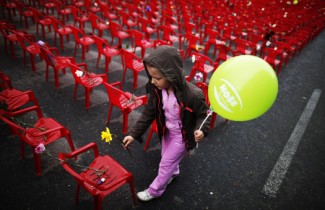
In an unprecedented act of unity, youth activists from across Bosnia and Herzegovina united to visit sites of former detention camps and pay respect to victims from all ethnic groups and sides of the conflict. Some 50 activists of the initiative “Because It Matters” from Prijedor, Banja Luka, Mostar, Tuzla, Sarajevo, Ljubuski, Gradiska, Konjic and other cities visited locations in Hadzici, Celebici, Jablanica, and Dretelj, where crimes were committed against civilians of Bosniak, Serb, and Croat ethnicities.

South African judge and human rights activist Albie Sachs is among the foremost transitional justice experts to have emerged from the anti-apartheid struggle and subsequent transition. In this interview with ICTJ Vice President Paul Seils, Sachs discusses the difficult balance of retribution and reconciliation, and offers possible lessons from the South African experience for other societies facing similar questions of truth and justice.