172 results

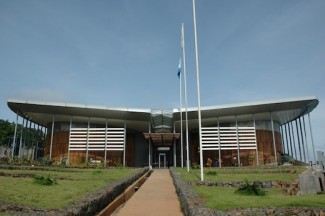
On August 30, 2012, ICTJ joined government officials and civil society in Freetown to celebrate the launch of a new website for the Truth and Reconciliation Commission of Sierra Leone and welcome the prospects for revitalization of Sierra Leone’s reconciliation.

The latest ICTJ Program Report explores transitional justice issues in the Middle East and North Africa (MENA) and charts our work in this important and dynamic region. Claudio Cordone, ICTJ’s program director covering the MENA region, discusses individual country scenarios, prospects for transitional justice processes and explains ICTJ’s involvement and impact. Cordone speaks about transitional justice principles being at the root of popular uprisings referred to as “Arab Spring” and the challenges facing societies in their efforts to reckon with legacies of dictatorships and recent violence. He describes ICTJ’s efforts to address the impact of violence on women and promote their participation in transitional justice initiatives. The interview provides a thorough overview of ongoing initiatives and future prospects in Tunisia, Libya, Egypt, Syria, Yemen, Lebanon and Israel and Occupied Palestinian Territory.

Transitional justice, at the core of its mission, strives to “break the ground on a future of peace and stability.” For countries with a violent or repressive past—and this can be said of most—implementing truth-seeking, criminal justice, reparations, and institutional reform measures forms the basis for establishing a culture of justice and respect for the rule of law.

The conviction of former Liberian president Charles Taylor for crimes against humanity and war crimes committed in neighboring Sierra Leone finds both West African countries and the region grappling with his terrible legacy. And while the people, and especially Taylor’s victims, in Sierra Leone welcome it as an important step in the country’s effort to overcome the consequences of the brutal civil war, Liberians are still a long way from seeing accountability for the suffering they endured.

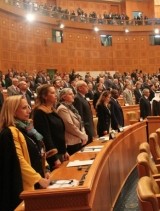
The National Conference to Launch a Dialogue on Transitional Justice in Tunisia was held on Saturday, April 14 in Tunis, initiating a process which should result in the adoption of a comprehensive law on transitional justice by the country’s National Constituent Assembly. ICTJ president David Tolbert delivered a keynote address.

This year’s Annual Emilio Mignone Lecture on Transitional Justice, coordinated by ICTJ and the Center for Human Rights and Global Justice at the NYU School of Law, focused on the intersection between transitional justice and international development.

Since 1990, 65 former heads of state or government have been legitimately prosecuted for serious human rights or financial crimes. Many of these leaders were brought to trial in reasonably free and fair judicial processes, and some served time in prison as a result. This book explores...

The International Criminal Court (ICC) must better communicate what is driving its actions to the public of the Middle East and North Africa (MENA) and elsewhere around the world if it is to develop confidence in its capacity to act as a guardian of international criminal law.

This paper explores practical issues regarding the relationship between the Truth and Reconciliation Commission (TRC) and Special Court (SC) in Sierra Leone. It looks at: 1) the legal relationship of the Commission and the Court; 2) the question of whether the TRC information should b...

This report presents a study of ex-combatants' knowledge and opinions of the Truth and Reconciliation Commission (TRC) and Special Court (SC) in Sierra Leone. Ex-combatants and these accountability institutions are interdependent. Ex-combatants need the TRC and SC to help them reinteg...