212 results

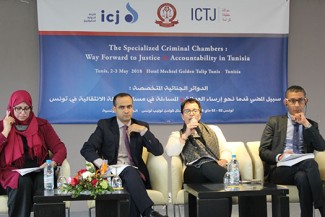
TUNIS—ICTJ hosted a conference on May 2 and 3 to address the current challenges facing Tunisia’s Specialized Criminal Chambers (SCC) as it proceeds to adjudicate cases of serious human rights violations committed under the former regime. The 90 guests who attended included members of Tunisia’s Truth...

This briefing paper focuses on the role of victims of human rights violations in criminal proceedings. This paper will provide examples of recent developments in the advancement of victim participation in criminal proceedings in international criminal law and domestic jurisdictions.&n...

Pursuing justice in a transitional context may take the form of multiple measures and goes beyond the pursuit of criminal prosecutions. Tunisia’s Basic Law on Transitional Law, adopted in December 2013, is a case in point. Despite its flaws, the the law introduced a fairly c...

In some contexts, the global community has resorted to international tribunals to prosecute the most serious past crimes, such as war crimes, crimes against of humanity, and genocide. While these international efforts contributed significantly to international justice, they were ...

Although youth are key political and social stakeholders who have much to contribute to—and gain from—transitional justice processes, they often remain marginalized from such processes or are given only a limited and predetermined space in which to engage. In recent years, the peacebu...

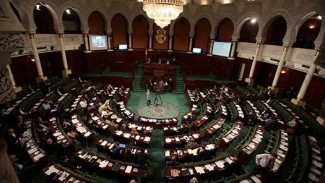
Members of parliament from political parties opposed to extending the work of Tunisia’s truth commission today voted to end the commission’s mandate. This came after parliamentarians from parties that support the extension walked out of the proceedings because their position is that the Organic Law that created the Truth and Dignity Commission (TDC or Instance Vérité et Dignité in French) authorized the TDC to extend its mandate. Earlier, the TDC had voted to extend its mandate by a year in order to complete its work. In a position paper distributed to members of parliament and civil society activists, ICTJ and the Victims’ Coalition for Dignity and Rehabilitation jointly said that they supported the extension of the TDC’s mandate, despite internal issues among its commissioners. ICTJ pointed out that other truth commissions elsewhere have sought and been given extensions in order to carry out key parts of their work, such as public hearings, or to complete writing their reports. Both ICTJ and the Victims’ Coalition said that an extension would allow the TDC to hold public hearings on marginalization and unemployment – which was one of the grievances that drove the Arab Spring in Tunisia. It would also give the Commission time to finalize its report and recommendations, including those on reparations.

On Friday, the United Nations hailed the progress made since 2014 in Tunisia in terms of transitional justice, underlining the importance of “enabling the transitional justice process to achieve its objectives." "The United Nations Resident Coordinator in Tunis, Diego Zorilla, congratulates all...

From Syria to Colombia and beyond, how do societies navigate the pursuit of justice in peace processes? That question animated ICTJ’s annual Intensive Course on Transitional Justice and Peace Processes, which this month gathered 31 participants from nearly 20 countries in Barcelona to discuss the place of justice in negotiations to end conflict. Go behind-the-scenes with our instructors and participants.

ICTJ and its partners will hosted a national dialogue in Kampala, Uganda on the aftermath of sexual violence. The aim: to shift stigma from victims to perpetrators and end the culture of silence. Sarah Kihika Kasande, head of ICTJ's Uganda office, explains why such efforts are essential to ending impunity and securing a lasting peace in the country.

The International Center for Transitional Justice denounces the passage of Tunisia’s deeply flawed “Administrative Reconciliation” law, which grants amnesty to public officials who were involved in corruption during the dictatorship but who claim they did not personally gain from it.