



480 results

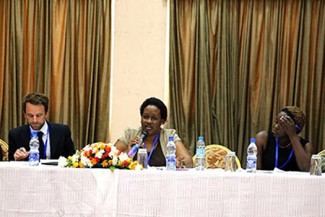
ICTJ hosts human rights scholar Michael Ignatieff and UN High Commissioner for Human Rights Zeid Ra'ad Al Hussein for an online debate whether the international community is abandoning the fight against impunity.

After LRA commander Dominic Ongwen was transferred to the ICC to face trial, questions have again been raised about Uganda's ability to prosecute serious crimes. A new publication from ICTJ analyzes the opportunities and challenges for the prosecution of serious crimes in Uganda and concludes with recommendations to enhance accountability in the country.

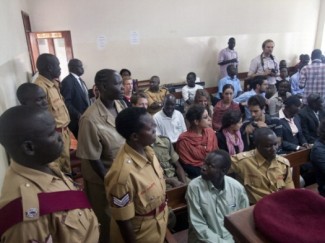
This paper describes proceedings in Uganda’s national courts against Thomas Kwoyelo, a former mid-level commander of the Lord’s Resistance Army, for war crimes and crimes against humanity. It analyzes the opportunities and challenges for the prosecution of serious crimes in Uganda and...

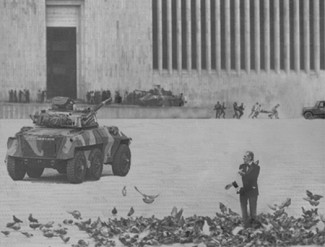
It has been nearly 30 years since one of the darkest episodes in Colombia’s recent history: the siege of the Justice Palace. Late last year, the families of those disappeared managed to take a step forward in their long struggle to obtain some measure of justice when the Inter-American Court of Human Rights issued a ruling condemning the Colombian state for responsibility in the disappearance of 12 individuals.

With the publication of the much-delayed US Senate Intelligence Committee’s partial report on the CIA’s Detention and Interrogation Program, at long last the truth is out. In this op-ed, ICTJ's President David Tolbert asks the United States to acknowledge the truth, hold the perpetrators accountable and address its obligation to the victims of its detention policies.

ICTJ welcomes the release of the final report of Brazil’s National Truth Commission after two and a half years of work to unveil the truth about serious human rights violations that took place in the country between 1946 and 1988, especially during the military dictatorship of 1964 to 1985. The final report is a historic contribution to truth and justice in a country where serious crimes have remained unaddressed for decades and calls on the Brazilian judiciary to disregard the Amnesty Law and act in cases of crimes against humanity.

Many in Colombia are also interested in learning from international experiences where criminal accountability measures were applied to pursue justice after massive human rights violations, like in Bosnia and Herzegovina, Cambodia, Sierra Leone and East Timor. With the aim of promoting an exchange of ideas on what lessons could be useful for Colombia, the ICTJ will be holding a conference in Bogotá on November 24th.

ICTJ Vice President Paul Seils writes that the ICC cannot endorse impunity measures any more than others committed to the defense of human rights and the struggle for peace and justice.

A new report from ICTJ provides insights on how women in northern Uganda have been affected by conflict, and gives recommendations on how transitional justice measures can recognize and redress the specific harms suffered by women as a result of the LRA conflict.

In this edition of the ICTJ Program Report, ICTJ Senior Associate Felix Reátegui discusses the principles behind the Truth and Memory program, and explains the imperatives of uncovering, acknowledging, and memorializing the past.