432 results

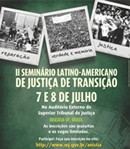
The second Latin American Conference on Transitional Justice closed July 8. In the concluding remarks, ICTJ Truth and Memory Program Director Eduardo Gonzalez stated that while this conference has focused on sharing the comparative experiences throughout Latin America, this has not been an academic exercise but a call to action. Read more on the conference blog

Although Brazil's dictatorship ended years ago, focus on transitional justice there is peaking now, as debate stirs over how to best address its past. Recent developments - including the Brazilian government's proposal of a truth commission, the opening of national archives, and the Inter-American Court of Human Rights' decision limiting the 1979 amnesty law - are at the core of the discussion. Eduardo Gonzalez, director of ICTJ's Truth and Memory Program, discusses the role accountability for the past can play in Brazil today.

The Canadian Truth and Reconciliation Commission (TRC) will hold its second of seven national events from June 28 to July 1 in Inuvik, Northwest Territories. The event will provide survivors of Canada’s Indian Residential Schools (IRS) and other participants an opportunity to contribute to documenting and publicizing what took place in this program of forced assimilation.

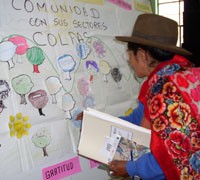
ICTJ has released One morning they came to our community: Stories of political violence in communities of Peru, a compilation of victims’ stories about Peru’s internal armed conflict from 1980 to 2000. The stories constitute an important form of recognizing the truth, as well as a demand for justice and reparations.

This report provides parameters for the creation of a reparations program in Peru. The program must be included in the process of raising a new national awareness in Peru regarding past abuses and building a legal-political framework more responsive to human rights. To ensure sustaina...

This paper analyzes the serious crimes process the UN established in Timor-Leste to try serious violations of human rights perpetrated in 1999. The main difficulty facing this process is that the vast majority of suspects are in Indonesia, and the Timorese government has not been able...

This report examines community expectations and experiences of Timor-Leste’s unique transition from occupation to independence. It documents the results of focus group discussions on an array topcis including violence and conflict, truth recovery, justice, accountability, reconciliat...

This report considers the work of the Special Prosecutor's Office (SPO) in Mexico, established to deal with crimes that public servants commit against social and political groups. It describes the basic requirements of investigation into "system crimes," emphasizing the need for an ap...

This paper considers the UN-sponsored regime established to respond to the crimes committed in East Timor during the Indonesian occupation between 1975 and 1999. The story of the quest for justice in East Timor perhaps can be summed up as one involving good intentions that were not ba...

From 1976 to 1983 Argentina was ruled by a military dictatorship and an estimated 10,000 to 30,000 people "disappeared." This paper outlines transitional justice developments in Argentina - including the investigation and prosecution of human rights violations. The current movement to...