




667 results

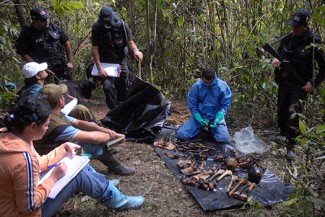
On International Day of the Victims of Enforced Disappearances, the families of the missing maintain their vow: "until we find them." As special bodies to search for their loved ones develop, what do victims expect?

As the government and FARC reach a peace deal, they have agreed to the creation of a special unit that will search for, locate and identify the disappeared. What do victims expect from this new body?

The agreement represents "an historic opportunity for Colombian society to build a peaceful future on foundations of respect for human rights and the rule of law,” said David Tolbert, president of ICTJ. “We have for years worked in support of victims’ rights in Colombia and will continue to do so with renewed energy and hope.”

The international organizations who have signed this statement are appalled at the illegal raid which occurred on August 15, 2016 at the residence of Guatemalan lawyer and human rights defender Ramón Cadena, Central America Director of the International Commission of Jurists.

Understanding education as a form of both reconstruction and reparations is essential for societies in their efforts to address victims’ rights and help victims and their families overcome the consequences of a painful past.

This summer, our Intensive Course on Transitional Justice and Peace Processes brought experts from around the world together in Barcelona to examine how transitional mechanisms can be integrated into peace negotiations. Read about the course and watch interviews with our experts.

Where should justice for some of the world’s worst crimes be done? In national courts or at the International Criminal Court in The Hague? Our Handbook on Complementarity explores those questions, laying out the interconnected relationship between the ICC and national court systems in...

Tunisian activists have taken to the streets this month to protest the proposed Economic Reconciliation Law recently revived in parliament. If approved, the bill would offer a path for corrupt Ben Ali-era officials and business people to legalize their stolen assets and secure a form of amnesty.

The Tunisian government reintroduced a bill that, if passed, would grant a path for reconciliation to corrupt business people and Ben Ali-era officials. They claim it will stimulate the economy, but economics professor Dr. Abdeljelil Bédoui explains why this law is not the solution.

Last week, El Salvador’s Supreme Court overturned the country’s General Amnesty Law enacted in 1993, which served as a blanket amnesty for all crimes committed by the parties during the country’s 12-year civil war. Now, prosecutors must work with victims to seek justice for these crimes.