

492 results

In a new analysis, the ICTJ addresses one of the crucial points of the peace negotiations between the Government of Colombia and the Revolutionary Armed Forces of Colombia-People’s Army (FARC-EP): the possibility of providing recourse to the broadest amnesty possible and pardons as part of the treatment of the different crimes committed in the framework of more than fifty years of armed conflict.

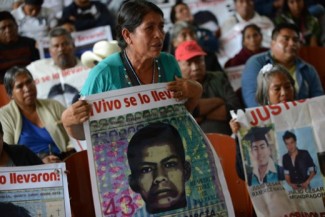
Carlos Martín Beristain is part of the panel investigating the disappearance of 43 students in Mexico. We sat down with him to discuss his work, the resistance the investigation has faced from the Mexican government and whether transitional mechanisms have a role in this context.

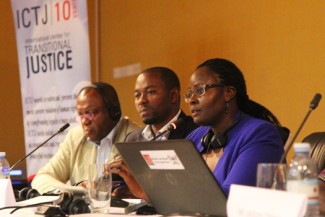
Today, ICTJ opened a two-day conference in Kampala, Uganda, gathering activists and officials from the African Great Lakes Region to discuss efforts at redress and accountability for serious human rights violations committed in their countries.

ICTJ files legal brief supporting Peruvian families in their case for a just compensation program for victims of Peru's 1980-2000 internal armed conflict.

Civil society leaders, members of victims' groups and state officials throughout the Great Lakes region will convene in Kampala, Uganda next week at a conference hosted by ICTJ. Attendees will share their experiences working for redress in their communities and discuss what strategies have proven effective at the local level.

After a society is torn apart by conflict or repression, who decides whether to remember or forget the painful past? Can forgiveness happen without acknowledgement of wrongdoing? Is there a difference between forgetting and denial? Join us as ICTJ debates the impact of remembrance on reconciliation with David Rieff and Pablo de Greiff.

What happens when a state refuses to acknowledge the suffering of victims of mass atrocities? Or when the public celebrates perpetrators as heroes? Earlier this month, a panel discussion hosted by The International Center for Transitional Justice and New York University’s Center for Global Affairs grappled with the impact of denial on justice.

In this editorial, Christopher Gitari argues that as the ICC case against Ruto and Sang comes to a halt, our focus must shift to other forms of justice in Kenya - including reparations for victims.

The African Union, the Kofi Annan Foundation and ICTJ opened a high-level conference examining the role of truth commissions in peace processes. The two-day conference, titled “Truth Commissions and Peace Processes in Africa,” has gathered senior staff from the African Union and member states as well as international and national experts to reflect on lessons learned from truth commissions that have emerged from peace processes in Africa and other continents.

ICTJ welcomes the announcement of formal peace talks between the Government of Colombia and the National Liberation Army (ELN). This new process opens the possibility of achieving comprehensive peace in the country and entering a new phase in Colombian history.