


429 results

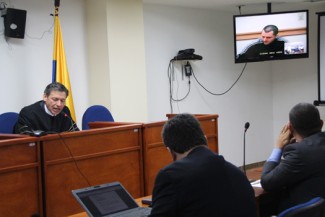
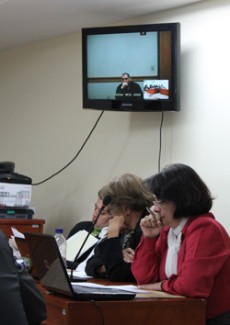
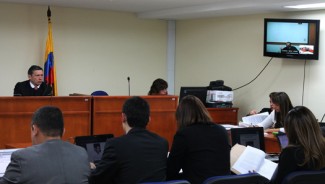
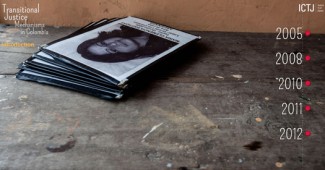
Next week, the Colombian courts will issue the first partial verdict in the Justice and Peace case against the paramilitary leader Hebert Veloza García, alias “HH,” one of the most significant cases of the Justice and Peace process. Ahead of the HH partial verdict on October 30th, ICTJ is launching a comprehensive timeline on transitional justice measures implemented in Colombia since 2005 that recognize victims' rights to truth, justice, reparations, and the guarantee of non-recurrence.

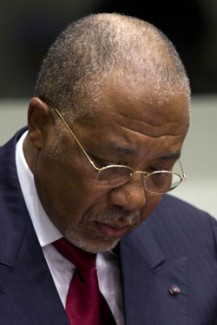
The significance of Charles Taylor’s judgment rendered few days ago in The Hague goes far beyond Taylor himself, or even the Special Court for Sierra Leone. This decision will be an unavoidable legal precedent in any future deliberation of the role played by leaders and states in crimes committed by forces they support in other countries, writes ICTJ's president David Tolbert in this op-ed.

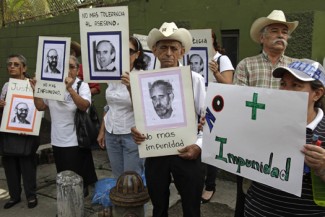
For more than 20 years, the Amnesty Law has hindered El Salvador from pursuing accountability for perpetrators of serious crimes committed against civilians during the civil war fought between the government and leftist insurgents in the 1980's. However, this may change in very near future. On September 20, the Constitutional Court admitted a petition claiming that the Amnesty Law passed in March 1993 –which shielded perpetrators of serious crimes committed during the 12-year civil war– is unconstitutional.

ICTJ's documentary Voices of Dignity inspired Wilson Herrera, professor of philosophy and researcher at the Universidad del Rosario in Colombia, to reflect on the role of victims in a democratic society, and on the importance of empowering them as agents of change and rights-holders, rather than relegating them to the status of permanent victims.

ICTJ welcomes the 6th National Event of Canada's Truth and Reconciliation Commission, part of the TRC’s journey towards completion of its mandate: to learn the truth about what happened in the residential schools, and to inform all Canadians about this history.

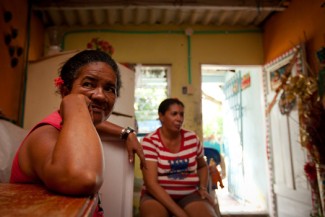
Enforced disappearances are among the cruelest of crimes. To the kidnapping, torture, and in many cases, murder of the victim, perpetrators intentionally create fear and uncertainty about the fate of the missing person. Although men are predominantly targeted, the impact on women is severe and lasting.

In the brutality of armed conflict or tyranny of a repressive regime, many who go missing are never found again: whether “disappeared” by agents of the state or abducted by an armed faction, the whereabouts of thousands are still unknown to this day. On this International Day of the Disappeared, ICTJ recognizes that enforced disappearances constitute crimes against humanity, and they affect women in ways unique from the impact on men.

Ten years ago, on August 28, 2003, the Truth and Reconciliation Commission (TRC) of Peru presented its final report, clarifying the grave human rights violations committed between 1980 and 2000 during the internal armed conflict and the regime headed by Alberto Fujimori. This month, ICTJ joins Peru to examine the legacy and impact of the TRC.

About the Project There are few crimes with such devastating and far-reaching impacts as enforced disappearance. Innocents taken from their homes vanish to secret locations known only to the perpetrators. Imprisoned, tortured, and often killed for dubious reasons, their disappearance l...

Human rights organizations in Brazil have created an online platform Brasil Nunca Mais Digital to preserve evidence and other documents related to more than 7,000 political prisoners tried before Brazil’s Military Supreme Court, during that country’s military dictatorship.