

273 results

This paper considers the efforts of Timor-Leste’s Commission for Reception, Truth and Reconciliation to address the forced displacement that occurred during the period of Indonesian occupation and in the post-Popular Consultation violence of 1999. It examines linkages between the work...

The 2006 crisis in Timor-Leste saw close to 15 percent of the population displaced from their homes, threatening to sink the country into protracted instability and violence. Remarkably, five years later the country was back on track, with the internal displacement issue largely resol...

The ICTJ Program Report is a new online feature that presents ICTJ’s work and impact around the globe. Through monthly in-depth interviews with our experts, the ICTJ Program Report will offer a view of ICTJ’s work on reparations, criminal justice, truth and memory and other transitional justice developments in countries where we work. To launch the series, we speak with Paul Seils, ICTJ's vice president and the head of our Program Office.

Argentina’s trials for crimes committed during the dictatorship of military juntas are widely seen as a successful national effort to seek accountability for past abuses. And while victims’ demands for justice continue to remain high, the judiciary is facing challenges to ensure the cases are dealt with expeditiously and fairly. In a interview for ICTJ's Spanish podcast series "Lessons from Latin America," Mirna Goransky, Assistant General Prosecutor for the Attorney General’s Office shares her perspectives on human rights trials in Argentina.

In collaboration with the Brookings-LSE Project on Internal Displacement, ICTJ’s Research Unit examined how transitional justice can be used to address the range of injustices associated with displacement and thereby serve as part of a comprehensive approach to the resolution of displ...

As we mark July 17, designated International Justice Day by the states parties of the International Criminal Court (ICC) just over two years ago, we should not limit our focus to the work of the court or criminal justice as such. Pursuing justice in the aftermath of atrocity presents an opportunity to do three crucial things: reaffirm a society’s shared values about basic ideas of right and wrong; restore confidence in the institutions of the state charged with protecting fundamental rights and freedoms; and recognize the human dignity of the victims of atrocities that have taken place.

Why pursue transitional justice in the aftermath of massive human rights violations? “The Case for Justice” provides a window into the debate about the relevance of transitional justice in today’s world.

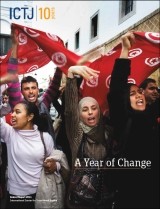
ICTJ recently released its 2011 annual report, covering the period from September 2010 through August 2011. Our tenth anniversary year, it has also been a period of transition for ICTJ and for transitional justice, as we responded to new opportunities in North Africa and the Middle East, and refocused on our future by embarking on a new strategic planning process.

This joint report released today by the International Center for Transitional Justice (ICTJ) and the Institute for Human Rights Study and Advocacy (ELSHAM-Papua) provides important insight into the ongoing debate on steps required to achieve a sustainable peace in Papua. The report reviews Papua's recent history within a transitional justice framework, and provides expert recommendations on truth seeking, justice, reparations, institutional reform, and enforcing the rights of women victims.

This joint report by ICTJ and the Institute for Human Rights Study and Advocacy (ELSHAM-Papua) provides important insight into the ongoing debate on steps required to achieve a sustainable peace in Papua. The report reviews Papua's recent history within a transitional justice framewor...