312 results

ICTJ provides constructive comments on the draft Internal Rules for the Extraordinary Chambers in the Courts of Cambodia (ECCC). While the draft Internal Rules provide greater procedural clarity for the ECCC proceedings, ICTJ lists several concerns in five areas that must be focused o...

This report examines the effectiveness of war crimes prosecutions in Serbia. While the War Crimes Chamber (WCC) and the Office of the War Crimes Prosecutor (OWCP) have had some success, significant concerns exist - such as opposition from ethnic nationalists. Despite shortcomings, the...

Demobilization was first initiated in Cambodia in 1992, but there have been few attempts to link disarmament, demobilization and reintegration (DDR) processes to transitional justice measures. The government's overriding consideration has been the preservation of stability, narrowly i...

In Afghanistan, community theater has begun to be used as a method of transitional justice to give victims a voice and create positive impulses for peacebuilding. According to a new briefing paper released by ICTJ, through theater, victims are able to create a “safe space” to discuss ...

Some habits die hard. This is especially true of ways of thinking. Despite significant changes in national and international law and practice in the last thirty years—the period that corresponds with the emergence of transitional justice as a field—the recent upheaval in the Middle East and Northern Africa region has provoked proposals that hearken back to a period that we may have thought long gone.

The allegations of war crimes and crimes against humanity committed in the final phases of the conflict in Sri Lanka, made in the Report of the Secretary-General’s Panel of Experts on Accountability in Sri Lanka released on April 25, must be thoroughly investigated. This is the first comprehensive UN report examining the events in the Vanni region between January and May of 2009 and it alleges that “tens of thousands of civilians” were killed. The Government of Sri Lanka, but also the relevant international bodies, cannot claim credibility if these findings are ignored.

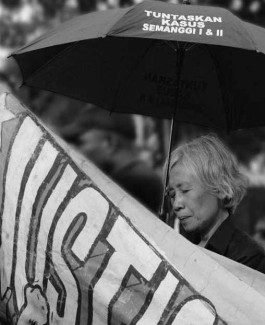
EXECUTIVE SUMMARY: A joint report released by the International Center for Transitional Justice (ICTJ) and KontraS (the Commission for the Disappeared and Victims of Violence) examines the variety of state-sponsored initiatives to address mass violations of human rights in Indonesia s...

A joint report released by the International Center for Transitional Justice (ICTJ) and KontraS (the Commission for the Disappeared and Victims of Violence) examines the variety of state-sponsored initiatives to address mass violations of human rights in Indonesia since the fall of So...

In August 2006 the Security Council created the UN Serious Crimes Investigation Team, as an extension of the previous investigation under the UN Integrated Mission Timor-Leste.

The purpose of this paper is to outline a proposal for a reparations program for Timor-Leste. Timor-Leste has experienced a number of mechanisms designed to provide justice for past wrongs. These have attempted to provide truth, criminal justice, and security sector reform. However to...
