326 results

In this op-ed marking Universal Children’s Day, ICTJ's Virginie Ladisch explains why within transitional justice, the capacity to make positive choices and demonstrate moral agency are attributes that need to be encouraged and fostered in children, especially former child soldiers.

In this opinion piece, Lucia Withers argues that Nepal's elected parties and their representatives should not limit their discussions to the establishment of a truth commission or whether it will provide for amnesties and/or prosecutions. Rather, they should focus on designing policies that are more comprehensive and that would better serve the rights and needs of conflict victims and contribute to broader peace-building efforts.

More truth commissions are being created now through peace agreements than at any other time in history. But are they living up to high expectations for truth, accountability, and reconciliation in societies emerging from violent conflicts? This week, the Kofi Annan Foundation and the International Center for Transitional Justice (ICTJ) held a three-day, high-level symposium to explore the challenges and benefits of truth commissions emerging from peace processes.

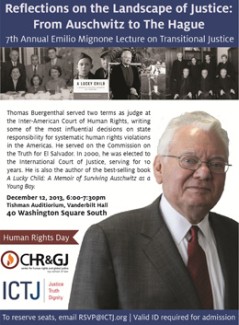
ICTJ and the Center for Human Rights and Global Justice at NYU School of Law are pleased to announce that Judge Thomas Buergenthal will be the speaker of the 7th Annual Emilio Mignone Lecture on Transitional Justice. Buergenthal is one of the world’s most distinguished jurists, whose name is synonymous with human rights and international justice. The lecture will be held on Thursday, December 12, from 6:00 to 7:30pm, in New York City.

ICTJ has expressed concern over the Bangladesh Supreme Court’s sentencing to death of Abdul Quader Mollah, a senior leader in Bangladesh’s largest Islamic party, for crimes against humanity committed during the country’s 1971 war of independence with Pakistan. The decision retroactively increased Mollah’s original penalty from life imprisonment to capital punishment, in breach of international legal conventions.

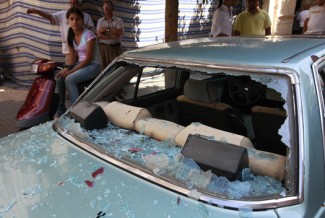
In this edition of the ICTJ Forum, we speak with Lynn Maalouf, one of the primary authors of a new report by ICTJ entitled Lebanon’s Legacy of Political Violence. The report compiles information on hundreds of incidents of serious crimes that took place from 1975 to 2008 in all parts of Lebanon.

This report compiles information on hundreds of incidents of serious human rights violations that occurred in Lebanon from 1975 to 2008, including mass killings, enforced disappearances, assassinations, forced displacement, and the shelling of civilian areas. It reveals patterns of vi...

Despite the overwhelming number of Lebanon's civilians killed, injured, displaced or otherwise harmed by decades of violence, there remains a near-total lack of official acknowledgment, reparation, truth about serious crimes or accountability for the perpetrators. ICTJ is pleased to release the first in a series of publications that aim to bring the crimes of the past in Lebanon to light.

Enforced disappearances are among the cruelest of crimes. To the kidnapping, torture, and in many cases, murder of the victim, perpetrators intentionally create fear and uncertainty about the fate of the missing person. Although men are predominantly targeted, the impact on women is severe and lasting.

In a briefing paper released on the eve of the International Day of the Disappeared, ICTJ documents the experience of the wives of the disappeared in Nepal and calls for measures to address the poverty, social stigma, and legal limbo they continue to face in their day-to-day lives.