

231 results

Thomas Buergenthal, Holocaust survivor and former judge of the International Court of Justice, is one of the world's most distinguished jurists. In conversation with ICTJ President David Tolbert, Judge Buergenthal shares his own personal story of surviving the Holocaust as a young boy, and reflects on the changing landscape of transitional justice around the world

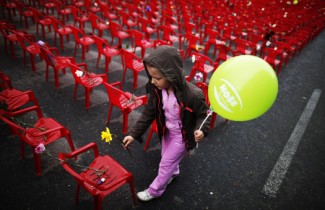
In an unprecedented act of unity, youth activists from across Bosnia and Herzegovina united to visit sites of former detention camps and pay respect to victims from all ethnic groups and sides of the conflict. Some 50 activists of the initiative “Because It Matters” from Prijedor, Banja Luka, Mostar, Tuzla, Sarajevo, Ljubuski, Gradiska, Konjic and other cities visited locations in Hadzici, Celebici, Jablanica, and Dretelj, where crimes were committed against civilians of Bosniak, Serb, and Croat ethnicities.

Elementary and high school teachers and students in the Montréal area gathered today for “Education Day,” an event convened by the Truth and Reconciliation Commission of Canada (TRC) to kick off the TRC’s historic Québec National Event, scheduled from April 24 to 27, 2013.

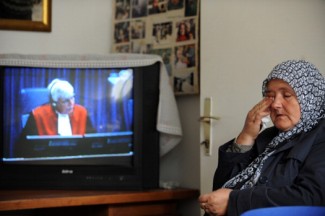
On April 10, the UN General Assembly is holding a thematic debate on the role of international justice in reconciliation processes. The debate was called by UN GA President Vuk Jeremic, of Serbia, in the wake of the recent acquittal of Croatian General Ante Gotovina by the International Criminal Tribunal for the Former Yugoslavia. Unfortunately, it has become clear that the real purpose of this debate is directed at undermining the ICTY, rather than to discuss an important issue, not only in the Balkans, but in a growing number of countries.

This opinion piece by Eduardo González, director of the Truth and Memory program at ICTJ, asks: can you build a solid, legitimate democracy on the sands of silence, or does truth provide a more trustful foundation?

In our work providing assistance to societies around the world, we draw continual inspiration from individuals and communities who refuse to ignore the abuses of the past, and who often face great obstacles to expose it. To honor their courage, we invite you to read a selection of perspectives on truth and dignity from those who have used their words to convey a powerful idea: truth is the foundation of justice.

This year, ICTJ's campaign for the International Day for the Right to the Truth centers around the theme, “Truth is the Foundation of Justice.” This notion, fundamental to the idea of a comprehensive approach to justice, is explored through several new releases from ICTJ.

March 21, 2013, New York, NY- The International Center for Transitional Justice (ICTJ) is launching a global awareness campaign for the International Day for the Right to the Truth, March 24, to affirm the right of victims to know the truth about human rights violations. Under the slogan, “Truth is the foundation of justice,” ICTJ’s campaign will highlight the important role that truth commissions can play in societies dealing with a legacy of violence and repression.

This publication provides an overview of the essential best practices guiding the main aspects of a truth commission, answering basic questions relating to its goals, powers, operations, framework, protections for commissioners and witnesses, and reporting. Its intention is to provide...

From February 27-March 1, leading indigenous rights activists from around the world will join their counterparts and other experts at Columbia University to discuss access to truth, justice, and reconciliation for indigenous peoples.