228 results

View the live broadcast of tonight's panel discussion with Richard Goldstone, David Tolbert, Hassan Jallow and Diane Orentlicher from 6:30pm–8:30pm.

This year’s Annual Emilio Mignone Lecture on Transitional Justice, coordinated by ICTJ and the Center for Human Rights and Global Justice at the NYU School of Law, focused on the intersection between transitional justice and international development.

View the live broadcast of tonight's Annual Emilio Mignone Lecture on Transitional Justice, from 6:00pm–7:40pm. Try Ustream's free video streaming desktop app

Join ICTJ as we co-host a delegation of RECOM’s leaders at two events in New York on November 14 and 15. They will share their experience campaigning for truth in the Western Balkans, present the draft mandate submitted to the presidents of the region, and discuss a successful public campaign that has gathered over 500,000 signatures in support of the commission.

ICTJ hosted its third Intensive Course, Truth-seeking and the Challenge of Sustainable Peace, on September 26–30. Based on concrete field experience, the participants explored the relationship between truth-seeking and peace in societies that have experienced or are still experiencing armed conflict.

As ICTJ celebrates ten years of existence and contribution to the development of the field of transitional justice, we are poised for a future of continued engagement with partners and communities seeking to overcome legacies of mass violence and repression. Ten years on, we now work in a world increasingly aware of the of the costs of failing to systematically transition from conflict and human rights abuse to the rule of law and equal rights for all citizens, and on the other hand, of the increasing complexity of doing so.

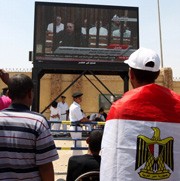
The appearance of Hosni Mubarak in the opening of his trial this week reassured millions of Egyptians that their revolutionary struggle was not in vain. But the truth about Mubarak’s ability to participate in his trial is still unclear. With the public doubting the court’s seriousness, Mubarak’s appearance could have been a political decision aimed at boosting confidence. If this is the case, the judiciary risks appearing politicized in the eyes of Egyptians.

The International Criminal Court (ICC) must better communicate what is driving its actions to the public of the Middle East and North Africa (MENA) and elsewhere around the world if it is to develop confidence in its capacity to act as a guardian of international criminal law.

This memorandum is a legal analysis of the applicability of the UN Convention on the Prevention and Punishment of the Crime of Genocide to events which occurred in Turkey-Armenia during the early twentieth century. It was drafted by independent legal counsel based on a request made to...

This study examines various aspects of existing reparations following the 1991-1999 conflicts in the former Yugoslavia. It clarifies the different categories of reparation; identifies groups potentially entitled to compensation; assesses the extent and fairness of existing policies; a...