


222 results

ICTJ’s president David Tolbert will be one of the featured speakers at this year’s Al Jazeera Forum in Doha, Qatar, which aims to explore the complex transformation of the socio-political and media landscapes of the Middle East and North Africa.

From its inception in 2003, the process of de-Baathification – the purge of Iraq’s state institutions of Saddam Hussein’s Baath Party members in the aftermath of the US-led invasion - polarized Iraqi politics and led to the collapse of many state functions. Today, Iraq continues to be haunted by its legacy. An examination of Iraq’s flawed vetting experience is presented in a major new ICTJ report, titled "A Bitter Legacy: Lessons of De-Baathification in Iraq."

The International Center for Transitional Justice (ICTJ) released a new report today providing detailed information and analysis on how Iraq dismantled Saddam Hussein’s Baath Party and purged state institutions of party members. The report, titled “A Bitter Legacy: Lessons of De-Baathification in Iraq,” carries valuable lessons for countries in the Middle East and North Africa (MENA) as they consider how to deal with legacies of abuse by the security and political apparatuses of former regimes.

Based on significant field research and interviews with the Higher National de-Baathification Commission, this report focuses on Iraq’s purge of members of Saddam Hussein’s Baath Party, which is the most well-known example of large-scale and politically based dismissals in the Middle ...

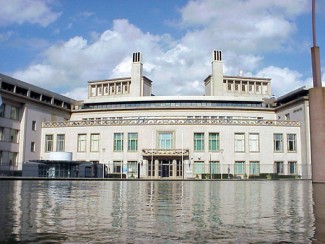
The Italy-based research center Osservatorio Balcani e Caucaso is hosting an online debate on the ICTY's contribution to reconciliation. The debate, featuring Refik Hodzic of ICTJ and Dr. Janine Clark of the University of Sheffield, who will present arguments for and against the notion that ICTY has contributed to reconciliation. Outside audiences are invited to participate online.

The United Nations has proclaimed December 10 as International Human Rights Day. The date commemorates the signing of the Universal Declaration of Human Rights in 1948, which represented the reaction of the international community to the horrors of the Second World War. Today is a day for reflection more than celebration. A cursory scan of events from the last few weeks has thrown up examples that demonstrate that the belief in human rights for all - in treating all states the same - is more of a tissue-thin membrane than a robust bulwark.

On Monday, December 10, the International Center for Transitional Justice will help tell the stories of victims and human rights activists at the forefront of the struggle for human rights across the globe. Send us images and texts that portray efforts seeking accountability, truth, remembrance, and redress in your community: we will share them on ICTJ’s Facebook page, and feature a selection of these stories on our website.

ICTJ partnered with the Center for Global Affairs at New York University to explore how political will of international and national actors impacts national war crimes proceedings. The panel examined four diverse country scenarios - the Democratic Republic of the Congo, Serbia, Iraq, and Guatemala.

The International Center for Transitional Justice strongly welcomes the decision of the UK High Court ordering the British government to pay damages to a group of Kenyans who were imprisoned and tortured by colonial authorities following the Mau Mau Rebellion of the 1950s.

The Fourth Intensive Course on Truth Commissions, presented by ICTJ in partnership with the Barcelona International Peace Resource Center (BIPRC), focuses this year on the challenge of recognizing the experiences of vulnerable populations in the work of truth commissions. Practitioners and academics representing 17 countries will participate in the week-long course, including members of the Brazilian and Ivorian Truth Commissions, the Maine Wabanaki-State Child Welfare TRC Process, and ICTJ experts from around the world.