


478 results

As Yemen prepares to embark on a national dialogue about its future, addressing the legacy of the past human rights violations remains one of its key challenges. A Law on Transitional Justice and National Reconciliation has been under discussion since February 2012 and may now be adopted in the coming weeks.

Established in 2004, Morocco’s Equity and Reconciliation Commission (IER: l’Instance équité et réconciliation) was one of the first attempts made in the Arab world to address human rights violations perpetrated in the post-independence period. It also aimed to include female victims o...

The trial of Ratko Mladic for genocide, crimes against humanity, and multiple war crimes committed during the war in Bosnia and Herzegovina, began yesterday. But these charges have done little to damage the hero status he enjoys today among the majority of Serbs, writes Refik Hodzic. Unless this legacy is addressed in the communities of Srebrenica and the rest of Bosnia, the outcome of his trial may prove to be merely symbolic, if that.

Transitional justice, at the core of its mission, strives to “break the ground on a future of peace and stability.” For countries with a violent or repressive past—and this can be said of most—implementing truth-seeking, criminal justice, reparations, and institutional reform measures forms the basis for establishing a culture of justice and respect for the rule of law.

As ArcelorMittal, the world’s largest steel company, invests 19.2 million pounds of steel to construct a monument marking London’s Olympic Games, a disturbing story is emerging about the refusal to memorialize a former concentration camp in Bosnia it owns today. Not only is ArcelorMittal unwilling to provide even a fraction of the cost of the London “Orbit” to commemorate the suffering of Bosnians in the notorious Omarska camp, but it has recently started denying victims access to the site.

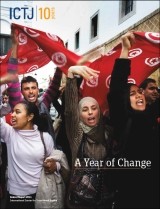
The National Conference to Launch a Dialogue on Transitional Justice in Tunisia was held on Saturday, April 14 in Tunis, initiating a process which should result in the adoption of a comprehensive law on transitional justice by the country’s National Constituent Assembly. ICTJ president David Tolbert delivered a keynote address.

It is an honor and a privilege for me to be with you for this important national conference. One year ago, on this exact same date, just three months after the Tunisian people impressed the world by peacefully ending decades of repression, I had the pleasure to speak at a conference ICTJ organized here in Tunis together with the Arab Institute for Human Rights, the Tunisian League for Human Rights and the UN Office of the High Commissioner for Human Rights. It was an important and lively debate on how to address the legacy of the past and move forward.

Last month ICTJ, with Saint Joseph University’s Modern Arab World Research Center and UMAM Documentation and Research launched the website “ Badna Naaref” (We Want to Know). This oral history project conducted by students tells the stories of suffering and survival during the war in Lebanon, serving both to commemorate and educate.

NEW YORK, March 22, 2011—The International Center for Transitional Justice (ICTJ) congratulates Pablo de Greiff, director of ICTJ’s Research Unit, on the nomination as the first UN Special Rapporteur on the promotion of truth, justice, reparation and guarantees of non-recurrence of serious crimes and gross violations of human rights.

The Spanish Supreme Court has ruled the judiciary has no place investigating the deaths and disappearances of the Franco era. The verdict is a disappointment for the victims of Francoism and confirms Spain remains unwilling to deliver justice for the crimes of the past, writes Eduardo González, director of ICTJ's Truth and Memory program