

532 results

Indigenous rights are increasingly being addressed through different transitional justice measures, and ICTJ is actively involved in the discourse on how truth commissions and other transitional justice mechanisms can help the struggle for the rights of indigenous people.

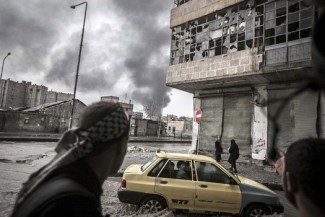
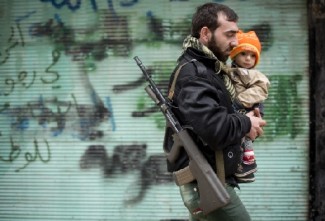
Though the future of President Bashar al-Assad’s regime remains to be seen, some are already planning for the complex aftermath of the regime’s demise. On January 26-27, Syrian activists joined ICTJ and other international experts in Istanbul for two days of discussion on possibilities for transitional justice in Syria.

Recent proposals on using transitional justice as a means of stabilizing Syria in the aftermath of the eventual fall of the Assad regime— including by providing incentives for loyalists to give up a possible ‘fight to the death’ in Damascus — are a significant development in the debate on Syria. As Syrian groups and international actors gathered as “Friends of Syria” consider these proposals, it is of paramount importance to be clear about what is meant by transitional justice.

The International Center for Transitional Justice (ICTJ) signed a cooperation agreement with the Tunisian government on January 16 to provide further technical assistance in establishing transitional justice mechanisms in the country. The development comes two years after protests forced President Zine El Abidine Ben Ali to step down and flee the country in January 2011.

The United Nations has proclaimed December 10 as International Human Rights Day. The date commemorates the signing of the Universal Declaration of Human Rights in 1948, which represented the reaction of the international community to the horrors of the Second World War. Today is a day for reflection more than celebration. A cursory scan of events from the last few weeks has thrown up examples that demonstrate that the belief in human rights for all - in treating all states the same - is more of a tissue-thin membrane than a robust bulwark.

On Monday, December 10, the International Center for Transitional Justice will help tell the stories of victims and human rights activists at the forefront of the struggle for human rights across the globe. Send us images and texts that portray efforts seeking accountability, truth, remembrance, and redress in your community: we will share them on ICTJ’s Facebook page, and feature a selection of these stories on our website.

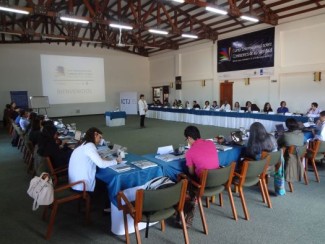
ICTJ partnered with the Center for Global Affairs at New York University to explore how political will of international and national actors impacts national war crimes proceedings. The panel examined four diverse country scenarios - the Democratic Republic of the Congo, Serbia, Iraq, and Guatemala.

The International Center for Transitional Justice (ICTJ), in cooperation with the United Nations Development Programme (UNDP), with support from the Governments of Denmark and South Africa, and in close consultation with the Assembly of States Parties to the Rome Statute (ASP), held a...

In times of transition, reparations can make a tangible impact on the everyday lives of victims. As part of a larger process of social change, reparations programs should be part of an integrated approach to addressing the fundamental rights of victims, not just their immediate needs. In this way, reparations programs have the potential to be transformative. It was this potential that was considered at a recent international seminar, "Transformative Reparation for Women Victims of Armed Conflict," held in Colombia, on November 16, 2012.

Where states commit widespread and systematic crimes against their citizens, or fail to seriously try to prevent them, they have a legal obligation to acknowledge and address the suffering of victims. Reparations, both symbolic and material, publicly affirm that victims are entitled to redress. Through video and three photogalleries, ICTJ’s multimedia project Voices of Dignity tells the story of two courageous women from Colombia, and their struggle for acknowledgement and redress in a country where more than four million people have been affected by decades of civil war.