



532 results

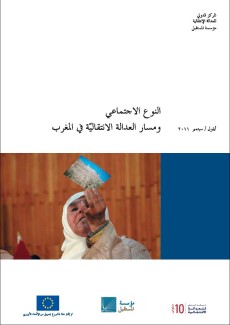
Established in 2004, Morocco’s Equity and Reconciliation Commission (IER: l’Instance équité et réconciliation) was one of the first attempts made in the Arab world to address human rights violations perpetrated in the post-independence period. It also aimed to include female victims o...

Transitional justice, at the core of its mission, strives to “break the ground on a future of peace and stability.” For countries with a violent or repressive past—and this can be said of most—implementing truth-seeking, criminal justice, reparations, and institutional reform measures forms the basis for establishing a culture of justice and respect for the rule of law.

With the goal of creating an opportunity for debate between civil society and the Colombian government on JPL reform, ICTJ and the Mission to Support the Peace Process from the Organization of American States have organized an event titled “Challenges and Opportunities of the Justice and Peace Law Reform,” to take place May 14 in Bogotá.

It has been nearly seven years since the passage of the Justice and Peace Law (JPL) in Colombia. The process continues today amidst controversies and important reflections on the direction it should take. What progress has been made and what are the shortcomings of how the law has been implemented?

Colombia continues to endure a complex conflict spanning more than four decades that has resulted in almost 400,000 registered victims and has displaced more than three million people. In a podcast with ICTJ’s vice president Paul Seils, we explore the concepts of prioritization and selection of cases and their relevance to Colombia's Justice and Peace process.

Colombia’s Justice and Peace Law (JPL) lies at the heart of the country’s efforts to dismantle notorious paramilitary groups and provide justice to thousands of their victims. As the government seeks to reform the JPL to allow for a more effective process, ICTJ will run a series of features to provide a deeper insight into the background and successes and challenges of the law.

In seeking to establish accountability for past atrocity, many transitional justice mandates have also sought to redress crimes against indigenous populations. To further explore this relationship, ICTJ and our partners in Canada and Colombia are holding two side events to the UN Permanent Forum on Indigenous Issues.

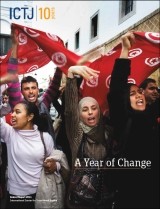
The National Conference to Launch a Dialogue on Transitional Justice in Tunisia was held on Saturday, April 14 in Tunis, initiating a process which should result in the adoption of a comprehensive law on transitional justice by the country’s National Constituent Assembly. ICTJ president David Tolbert delivered a keynote address.

It is an honor and a privilege for me to be with you for this important national conference. One year ago, on this exact same date, just three months after the Tunisian people impressed the world by peacefully ending decades of repression, I had the pleasure to speak at a conference ICTJ organized here in Tunis together with the Arab Institute for Human Rights, the Tunisian League for Human Rights and the UN Office of the High Commissioner for Human Rights. It was an important and lively debate on how to address the legacy of the past and move forward.

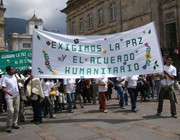
On April 9, Colombia commemorated for the first time the National Day of the Memory and Solidarity with the Victims. This photo gallery collects the expressions of commemoration that took place in three cities in the country: Bogotá, Medellín and Villavicencio.